
Three Numbers That Define Every Holster
Most holster buyers focus on brand, material, and price. These matter — but they're secondary to three specifications that determine whether a holster actually performs its job safely and effectively: trigger guard protection, retention level, and ride height.
Get these three right and almost any quality holster will serve you well. Get them wrong and even an expensive holster from a reputable brand can be unsafe, impractical, or both. Understanding what each specification means, why it matters, and how to choose correctly for your context is foundational knowledge for anyone who carries a firearm.
This guide covers all three in depth — the mechanics, the standards, the trade-offs, and the practical implications for concealed carriers, duty officers, and range shooters alike.
Part One: Trigger Guard Protection
Why the Trigger Guard Is the Most Critical Holster Feature
The trigger guard is the single most important area of any holster. A holster's primary safety function — its most fundamental job — is to prevent anything from contacting the trigger while the pistol is holstered. If the trigger can be contacted while the pistol is in the holster, the holster is dangerous regardless of its other qualities.
This isn't theoretical. Negligent discharges during holstering are one of the most common firearm accidents among both trained and untrained carriers. The causes are consistent: a shirt tail folded into the holster mouth, a drawstring caught on the trigger, a finger that wasn't properly indexed before re-holstering, or a holster that doesn't fully cover the trigger guard. In every case, something contacted the trigger while the pistol was being holstered or while it was holstered, and the pistol fired.
A holster with complete, rigid trigger guard coverage eliminates this failure mode. The trigger cannot be contacted because the holster physically prevents access to it.
What Complete Trigger Guard Coverage Means
Complete trigger guard coverage means the holster shell fully encloses the trigger guard on all sides — front, sides, and rear — with no gaps that would allow a finger, fabric, or other object to reach the trigger. The coverage must be:
- Full perimeter: No gaps at the front of the trigger guard, the sides, or where the trigger guard meets the frame. Any gap is a potential path to the trigger.
- Rigid: The holster material must maintain its shape under pressure. A soft holster that can be compressed inward by external pressure can allow the trigger to be contacted even if the holster nominally covers the trigger guard. Rigid Kydex or hard polymer maintains its shape regardless of external pressure.
- Maintained after the draw: The holster must retain its shape after the pistol is removed. A holster that collapses after the draw requires two hands to re-holster — creating a situation where the muzzle must be directed at the support hand or the body while the holster is held open. This is a significant safety hazard.
The Re-Holstering Problem
Re-holstering is statistically more dangerous than drawing. During the draw, the trigger finger is indexed along the frame and the holster is being cleared — the trigger is not being contacted. During re-holstering, the muzzle is being directed back into the holster, and anything that enters the holster mouth before the muzzle can contact the trigger as the pistol is pushed in.
The safe re-holstering protocol addresses this: clear the cover garment completely, visually inspect the holster mouth, ensure nothing is in the holster, then slowly guide the muzzle in while maintaining trigger finger discipline. But this protocol only works if the holster maintains its shape — if the holster has collapsed, the shooter must hold it open with the support hand, which creates its own hazards.
Rigid Kydex holsters that maintain their shape after the draw are the standard for safe re-holstering. Soft leather holsters, nylon holsters, and any holster that collapses after the draw fail this requirement.
Audible Retention Clicks: Confirming Proper Seating
Quality holsters provide an audible and tactile "click" when the pistol is fully seated. This click confirms that the pistol is properly positioned in the holster — that the trigger guard is fully covered and the retention mechanism is engaged. Without this confirmation, the carrier cannot be certain the pistol is properly holstered without visual inspection.
The audible click is particularly important during re-holstering in low-light conditions or when the carrier's attention is divided. It provides positive confirmation that the pistol is secure without requiring the carrier to look at the holster.
Platform-Specific Fit vs Universal Holsters
Trigger guard coverage is most reliable with platform-specific holsters — holsters molded or designed for a specific pistol model. A holster designed for a Glock 19 has trigger guard coverage precisely matched to the Glock 19's trigger guard geometry. Universal holsters that accommodate multiple pistol models necessarily make compromises in fit that can affect trigger guard coverage.
This doesn't mean universal holsters are inherently unsafe — quality universal holsters are designed with adequate coverage for the range of pistols they accommodate. But platform-specific holsters provide the most precise fit and the most reliable trigger guard coverage.
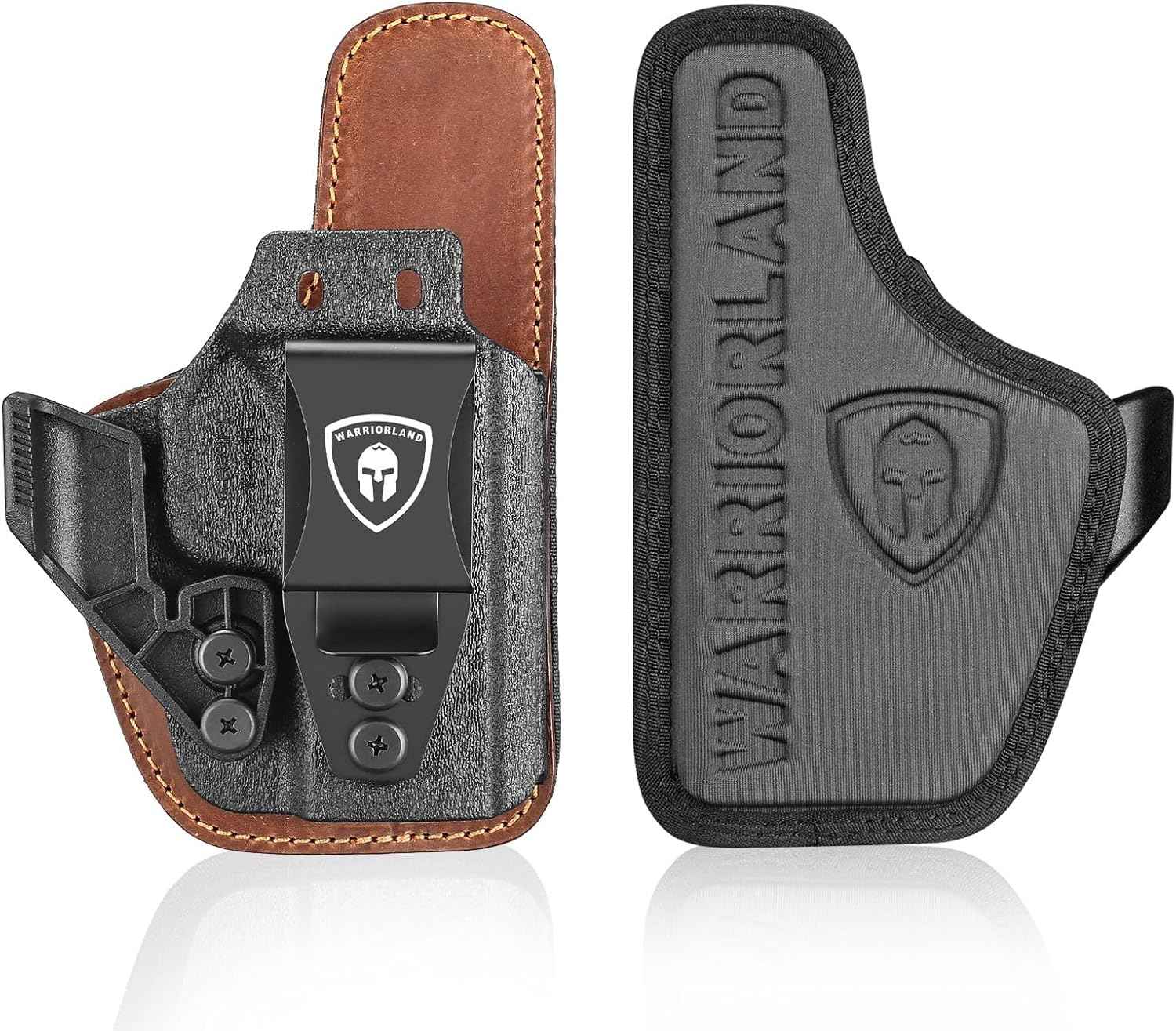
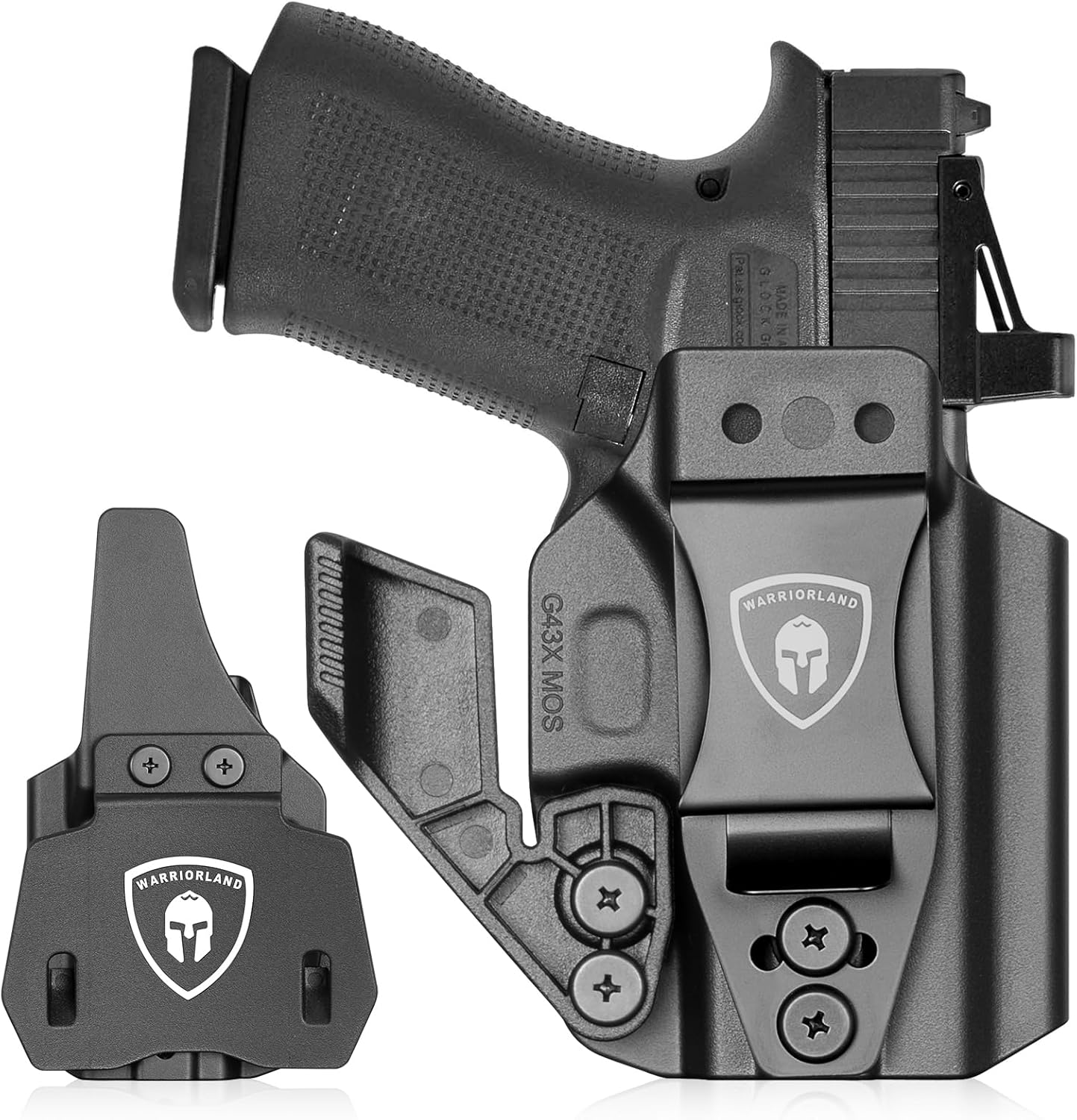
WARRIORLAND's IWB lineup prioritizes complete trigger guard coverage across all platforms. The Glock 17/19 IWB Kydex holster with claw and optic cut provides precision-molded trigger guard coverage for the most popular Glock platforms, with rigid Kydex construction that maintains shape after every draw. The S&W Bodyguard 2.0 IWB holster with audible lock adds an audible retention click that confirms proper seating — critical for a carry pistol where positive holstering confirmation matters. For carriers who want flexibility across platforms, the universal OWB paddle holster with optic cut fits 40+ compact pistols while maintaining adequate trigger guard coverage across the range.
Part Two: Retention Level
What Retention Means and Why It Matters
Holster retention refers to the force required to remove the pistol from the holster. A holster with adequate retention keeps the pistol in place during physical activity, a struggle, or an attempted disarm. A holster with insufficient retention allows the pistol to fall out or be grabbed by an attacker. A holster with excessive retention slows the draw to the point of impracticality.
Retention is measured in levels, with each level representing an additional mechanical device that must be defeated to remove the pistol:
Level I Retention: Passive Friction Only
Level I retention relies entirely on friction between the holster and the pistol. The holster is molded or adjusted to grip the pistol firmly enough that it won't fall out during normal activity, but the pistol can be drawn with a straight upward pull without any additional manipulation.
How it works: The holster shell is molded to the pistol's contours. The friction between the shell and the pistol's surface holds the pistol in place. Retention is adjusted by tightening or loosening a retention screw that changes the holster's grip on the pistol.
Appropriate for: Concealed carry IWB holsters, range holsters, competition holsters, and any context where the carrier's body and clothing provide additional security against disarm attempts. The cover garment over an IWB holster provides a significant additional barrier to disarm attempts that Level I retention doesn't need to address alone.
Not appropriate for: Open carry duty use, law enforcement patrol, security work, or any context where the pistol is visible and accessible to potential attackers without a cover garment barrier.
Level II Retention: One Active Retention Device
Level II retention adds one active retention device — a mechanism that must be deliberately defeated before the pistol can be drawn. Common Level II devices include:
- Thumb break: A strap over the back of the slide that must be snapped open with the thumb during the draw stroke
- Thumb release: A button or lever on the holster body that must be pressed with the thumb to release the pistol
- Rotating hood: A hood over the back of the slide that rotates forward during the draw to release the pistol
- Index finger release: A lever activated by the index finger during the draw stroke
How it works: The retention device physically blocks the pistol from being drawn until deliberately released. An attacker who grabs the pistol and pulls straight up cannot remove it — they must also know how to operate the specific retention device, which requires familiarity with that holster design.
Appropriate for: Open carry, uniformed law enforcement, security personnel, and any context where the pistol is visible and potentially accessible to attackers. Level II is the minimum standard for most law enforcement duty holsters.
Training requirement: The retention device must be defeated as part of the draw stroke. This requires dedicated training until the motion is automatic — a retention device that slows the draw under stress is a liability. The draw stroke with a Level II holster must be practiced until the retention defeat is seamless.
Level III Retention: Two Active Retention Devices
Level III retention adds a second active retention device, requiring two separate deliberate actions to draw the pistol. This provides the highest level of disarm resistance but also the most complex draw stroke.
Appropriate for: High-risk law enforcement environments, corrections officers, and contexts where disarm attempts are a significant threat. Level III is standard for many patrol officers in high-crime environments and for officers who work in close contact with potentially violent individuals.
Training requirement: Level III draw strokes are significantly more complex than Level I or II. Extensive training is required to execute the draw reliably under stress. Officers who carry Level III holsters typically train the draw stroke more frequently than those with lower retention levels.
Choosing the Right Retention Level
| Context | Recommended Retention Level | Rationale |
|---|---|---|
| Concealed carry (IWB) | Level I | Cover garment provides disarm barrier; draw simplicity is priority |
| Concealed carry (OWB) | Level I–II | Less cover garment protection; Level II adds security without excessive complexity |
| Open carry (civilian) | Level II | Pistol visible and accessible; active retention device provides meaningful disarm resistance |
| Law enforcement patrol | Level II–III | High disarm risk; institutional training supports complex draw strokes |
| Corrections/high-risk duty | Level III | Maximum disarm resistance required; extensive training available |
| Range/competition | Level I | Controlled environment; draw speed is priority |
Retention Adjustment: Getting the Tension Right
Level I retention is adjustable on most quality holsters via a retention screw. The correct tension is firm enough that the pistol doesn't move when the holster is inverted and shaken, but light enough that the draw stroke is smooth and consistent. Finding this balance requires experimentation — start with the screw tightened until the pistol is secure, then back off slightly until the draw feels smooth.
Over-tightening retention creates a draw that requires excessive force, which can cause the shooter to pull the pistol at an angle rather than straight up, potentially disrupting the firing grip. Under-tightening creates a pistol that can shift in the holster during activity or fall out during vigorous movement.
WARRIORLAND's retention lineup covers the full range. For Level I concealed carry, the Glock 17/19 IWB carbon fiber Kydex holster with claw provides adjustable passive retention with a concealment claw for IWB carry. For Level II duty and open carry, the Glock 17/19 OWB Level II thumb release holster adds a positive thumb-activated retention device to the standard Glock platform. The Glock 19 TLR-7/7A OWB Level II thumb release holster extends Level II retention to light-equipped Glock configurations. For universal Level II coverage, the universal OWB holster with Level II retention and 360° adjustable paddle fits compact to full-size handguns with 4–5.3" barrels. The universal OWB holster with index finger release provides an alternative active retention mechanism for carriers who prefer index finger activation over thumb release.
Part Three: Ride Height
What Ride Height Is and Why It Matters
Ride height refers to how high or low the pistol sits relative to the belt line when holstered. A high-ride holster positions the pistol higher, with more of the grip above the belt. A low-ride holster positions the pistol lower, with the grip closer to belt level or below it. Mid-ride positions the pistol between these extremes.
Ride height affects four critical aspects of holster performance: draw speed and consistency, concealment, comfort during seated and active use, and compatibility with body armor and duty gear. Getting ride height right for your context is as important as getting retention level right.
High Ride: Speed and Concealment
A high-ride holster positions the pistol with the grip well above the belt line. The shooter's hand can establish a full firing grip while the pistol is still in the holster, and the draw stroke is shorter because the pistol doesn't need to travel as far before it clears the holster.
Advantages of high ride:
- Faster draw: The shorter draw stroke and ability to establish grip before clearing the holster enables faster presentation. High-ride holsters are preferred by competitive shooters and carriers who prioritize draw speed.
- Better concealment for IWB: A higher-riding IWB holster positions more of the pistol below the beltline, reducing the grip's exposure above the belt. Combined with a concealment claw, high-ride IWB holsters can conceal full-size pistols effectively.
- More natural grip establishment: The hand doesn't need to reach as far down to establish the firing grip, which is particularly beneficial for shooters with shorter arms or limited shoulder mobility.
Disadvantages of high ride:
- Comfort when seated: A high-riding holster can dig into the ribs or side when seated, particularly for IWB carry. The grip protrudes further above the belt, creating more contact with the body in seated positions.
- More visible for OWB: A high-riding OWB holster positions the grip higher and more visible, which can increase printing under a cover garment.
Mid Ride: The Balanced Standard
Mid-ride positions the pistol at a height where the grip is approximately at belt level — neither significantly above nor below. This is the most common ride height for duty holsters and the default for most OWB holsters.
Advantages of mid ride:
- Balanced performance: Mid-ride provides a reasonable draw speed without the seated comfort issues of high-ride holsters. It's the most versatile position for carriers who alternate between standing and seated use.
- Standard for duty use: Most law enforcement duty holsters use mid-ride positioning, which means training and qualification standards are typically developed around mid-ride draw strokes.
- Compatible with most body types: Mid-ride works well across a wider range of body types than high or low ride, making it the default recommendation for most carriers.
Low Ride / Drop Offset: Tactical and Specialized Use
Low-ride and drop-offset holsters position the pistol significantly below the belt line, often using a drop attachment that extends the holster downward from the belt. This positions the grip at or below mid-thigh level.
Advantages of low ride:
- Body armor compatibility: When wearing plate carriers or tactical vests, a standard-height holster may be blocked by the armor's lower edge. A drop-offset holster positions the pistol below the armor where it remains accessible.
- Reduced interference with duty gear: Carriers with extensive belt-mounted equipment (magazine pouches, radio, handcuffs) may find that a drop-offset holster positions the pistol away from crowded belt real estate.
- Comfort for some body types: Carriers with wider hips or specific body proportions may find low-ride positioning more comfortable than mid or high ride.
Disadvantages of low ride:
- Slower draw: The longer draw stroke required to clear a low-riding holster is slower than high or mid ride. The hand must travel further to establish the grip and clear the holster.
- Retention challenges: A low-riding holster can swing away from the body during movement, particularly during running or climbing. This movement can make the draw stroke inconsistent.
- Not appropriate for concealed carry: Low-ride OWB holsters are impractical for concealed carry — the pistol sits too low to be covered by a standard cover garment.
Ride Height for IWB Carry: A Different Calculation
For IWB holsters, ride height works differently than for OWB. IWB ride height determines how much of the pistol sits above the beltline (and thus how much grip is exposed for the draw) versus below the beltline (and thus how much is concealed by the pants).
A higher IWB ride height exposes more grip above the belt, making the draw easier but potentially increasing printing. A lower IWB ride height conceals more of the pistol below the belt, reducing printing but requiring the hand to reach further down to establish the grip.
Most IWB carriers find that a ride height that positions the top of the grip approximately at belt level provides the best balance of concealment and draw accessibility. Adjustable ride height — available on quality IWB holsters — allows the carrier to fine-tune this balance for their specific body proportions and clothing.
Cant and Ride Height: The Interaction
Cant — the forward or rearward angle of the holster — interacts with ride height to determine the pistol's final position and draw characteristics. A forward cant (FBI cant) angles the grip rearward, which can make the draw more natural for some shooters and improve concealment by tucking the grip closer to the body. A straight (0°) cant positions the pistol vertically, which is the most natural for a straight upward draw.
Adjustable cant holsters allow the carrier to optimize both the angle and the height simultaneously, which is why adjustable cant and adjustable ride height are both valuable features on quality holsters.
Ride Height Recommendations by Context
| Context | Recommended Ride Height | Rationale |
|---|---|---|
| IWB concealed carry | High to mid (adjustable) | Balance concealment with draw accessibility; adjust for body type |
| OWB concealed carry | High to mid | Higher ride improves concealment under cover garment |
| Uniformed duty (no armor) | Mid | Standard for duty use; balanced performance across activities |
| Tactical/plate carrier use | Low / drop offset | Positions pistol below armor for accessibility |
| Competition | High | Maximizes draw speed; concealment not a factor |
| Range use | Mid to high | Comfort and draw speed balanced; no concealment requirement |
How the Three Specifications Work Together
The Complete Holster Evaluation Framework
Trigger protection, retention level, and ride height don't operate independently — they interact to determine the holster's overall performance. A holster with excellent trigger guard coverage but wrong retention level for its context is unsafe. A holster with correct retention but wrong ride height for the carrier's body is impractical. All three must be right simultaneously.
The evaluation sequence:
- Trigger guard coverage first: If the holster doesn't provide complete, rigid trigger guard coverage, it fails the most basic safety requirement. No other feature compensates for inadequate trigger guard coverage.
- Retention level second: Match the retention level to the carry context. Concealed carry needs Level I; open carry and duty use need Level II or higher. A retention level that's too low for the context is a safety risk; too high creates draw complexity that requires training investment.
- Ride height third: Optimize ride height for the carrier's body, clothing, and activity. Adjustable ride height is the most practical solution because it allows fine-tuning without buying a different holster.
The Holster Safety Checklist
Before trusting any holster for carry, verify:
- ✅ Trigger guard fully covered: No gaps, no exposed trigger area from any angle
- ✅ Rigid construction: Holster maintains shape after pistol is removed
- ✅ Audible retention click: Positive confirmation of proper seating
- ✅ Retention appropriate for context: Level I for concealed carry; Level II+ for open/duty carry
- ✅ Retention adjustment verified: Pistol secure when holster inverted; draw smooth and consistent
- ✅ Ride height optimized: Draw accessible; comfort acceptable for intended use duration
- ✅ Platform-specific fit: Holster designed for your specific pistol model
- ✅ Re-holstering safe: Can re-holster one-handed without directing muzzle at body
WARRIORLAND Holster Recommendations by Specification
For IWB Concealed Carry: Level I Retention, Adjustable Ride Height
IWB concealed carry holsters need complete trigger guard coverage, Level I adjustable retention, and ride height that balances concealment with draw accessibility. Rigid Kydex construction is essential for safe re-holstering.
- Glock 17/19 IWB Kydex Holster with Claw and Optic Cut — Rigid Kydex trigger guard coverage, adjustable retention, concealment claw, optic cut. Covers Glock 17/19 Gen3-6, G26, G34, MOS versions, G19X, G44, G45. The complete IWB specification package for the most popular Glock platforms.
- Glock 17/19 IWB & OWB Convertible Holster with Claw and Adjustable Ride Height — Converts between IWB and OWB configurations. Optic cut, claw, adjustable ride height. Covers G19 Gen6, Glock 17/19/26/34 Gen3-5, MOS versions, G19X, G23, G32, G44, G45. Maximum flexibility with full specification compliance.
- S&W Bodyguard 2.0 IWB Kydex Holster with Audible Lock, Claw, and Optic Cut — Audible retention click confirms proper seating. Claw, adjustable cant, optic cut. The complete specification package for Bodyguard 2.0 carry.
- Glock 17/19 IWB Carbon Fiber Kydex Holster with Claw and Optic Cut — Carbon fiber Kydex construction. Claw concealment, optic cut, adjustable retention. Covers Glock 17/19/19X/44/45 Gen1-5 and G23/G32 Gen3-4.
For OWB Open Carry and Duty: Level II Retention, Mid Ride
OWB duty and open carry holsters need Level II active retention, complete trigger guard coverage, and mid-ride positioning for standard duty use. The retention device must be integrated into the draw stroke through training.
- Glock 17/19 OWB Level II Thumb Release Holster — Positive thumb-activated retention device. Covers Glock 17/19/19X/44/45 Gen3-5 and G23/G32 Gen3-4. The standard Level II solution for the most common Glock duty platforms.
- Glock 19 TLR-7/7A OWB Level II Thumb Release Holster with Optic Cut — Level II retention for light-equipped Glock configurations. Fits Glock 17/19/19X/44/45 Gen3-5, G23/G32 Gen3-4, G19 Gen6 with TLR-7/7A/7X/8HL-XG. Optic cut included.
- Universal OWB Holster with Level II Retention and 360° Adjustable Paddle — Fits compact to full-size handguns with 4–5.3" barrels. Level II retention, 360° adjustable paddle for 1.5–2.0" belts, optic cut. The versatile Level II solution for carriers who use multiple platforms.
- Universal OWB Holster with Index Finger Release — Index finger-activated retention release. Adjustable retention. Fits most gun types. Alternative active retention mechanism for carriers who prefer index finger over thumb activation.
- SIG P365 TLR-6 OWB Holster with Index Finger Release — Platform-specific Level II solution for the SIG P365 with TLR-6/TLR-6HL light. 360° adjustable belt clip for 1.5–2.25" belts.
For Light-Bearing OWB: Mid Ride with Active Retention
- Glock 17/19/19X/45 OWB Light-Bearing Holster with Thumb Release and 2.0" Mid-Ride Belt Loop — Fits TLR-7A, TLR-7X, TLR-7 HL-X, TLR-8A, TLR-8X and compatible lights. Thumb release active retention, optic cut, 2.0" mid-ride belt loop. The complete specification package for light-equipped Glock OWB carry.
Conclusion: Specifications Before Brand
The holster market is full of options at every price point, from every brand, in every material. The carriers who make the best holster decisions are the ones who evaluate specifications first — trigger guard coverage, retention level, ride height — and then select from holsters that meet those specifications.
A holster that fails on trigger guard coverage is dangerous regardless of brand or price. A holster with the wrong retention level for its context is either unsafe (too low) or impractical (too high). A holster with the wrong ride height for the carrier's body and activity is uncomfortable and potentially slower to draw from.
Get the specifications right. Then choose the holster that meets those specifications for your platform. Train with your complete setup until every element — draw stroke, retention defeat if applicable, re-holstering protocol — is automatic. And carry consistently, because the best-specified holster in the world doesn't help if the gun is at home.
WARRIORLAND's holster lineup is built around these three specifications — from the complete-spec IWB Glock holster to the Level II OWB duty holster to the mid-ride light-bearing OWB. Find the specification that fits your context. Build the complete system. Carry with confidence.