
The Debate That Never Quite Ends
Every new shooter eventually faces this question, and every experienced shooter has an opinion: striker-fired or hammer-fired? The debate has been running since polymer-framed striker-fired pistols began displacing traditional hammer-fired designs in the 1980s, and it shows no signs of resolution — because there isn't one universal answer.
Both action types have genuine advantages. Both have real limitations. The striker-fired pistol's dominance in law enforcement and civilian carry markets reflects real-world advantages in simplicity and consistency. The hammer-fired pistol's continued presence in competition, military service, and among experienced shooters reflects equally real advantages in trigger quality, versatility, and mechanical transparency.
This guide explains how each action type works, what it does well, where it falls short, and how to think about the choice for your specific situation. No tribal loyalty, no brand advocacy — just the information you need to make an informed decision.
How Each Action Works: The Mechanical Foundation
Striker-Fired: The Simplified System
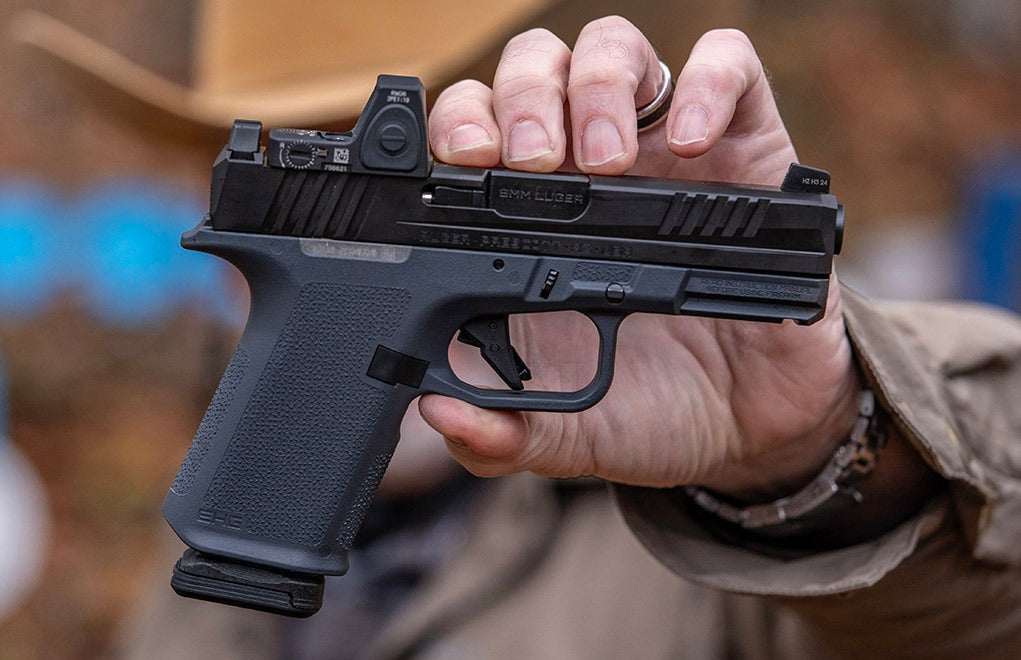
In a striker-fired pistol, a spring-loaded striker (a metal rod with a pointed tip) replaces the traditional hammer and firing pin combination. When you rack the slide, the striker is partially or fully compressed against its spring. When you press the trigger, the trigger mechanism releases the striker, which drives forward under spring tension to strike the primer and fire the cartridge.
The key characteristic of striker-fired operation is that the energy to fire the cartridge comes entirely from the striker spring — there's no separate hammer falling under gravity or spring tension to drive a firing pin. The trigger press both completes the striker's compression (in partially pre-cocked designs) and releases it.
Common striker-fired pistols: Glock (all models), SIG Sauer P320, Springfield Armory Hellcat/XD series, Smith & Wesson M&P series, Walther PPQ/PDP, HK VP9, Ruger Security series, Taurus G series.
Hammer-Fired: The Traditional System
In a hammer-fired pistol, a separate hammer — either external (visible outside the slide) or internal (concealed within the slide) — falls forward under spring tension to strike a firing pin, which in turn strikes the primer. The hammer can be cocked manually (single-action) or by the trigger pull itself (double-action).
Hammer-fired pistols come in several configurations that significantly affect their operation:
- Single-Action Only (SAO): The hammer must be manually cocked before each shot. The trigger only releases the cocked hammer — it doesn't cock it. Results in the lightest, crispest trigger pulls. The 1911 is the classic example.
- Double-Action Only (DAO): The trigger both cocks and releases the hammer on every shot. Results in a long, heavy trigger pull that's consistent from shot to shot. Common in revolvers and some semi-automatics.
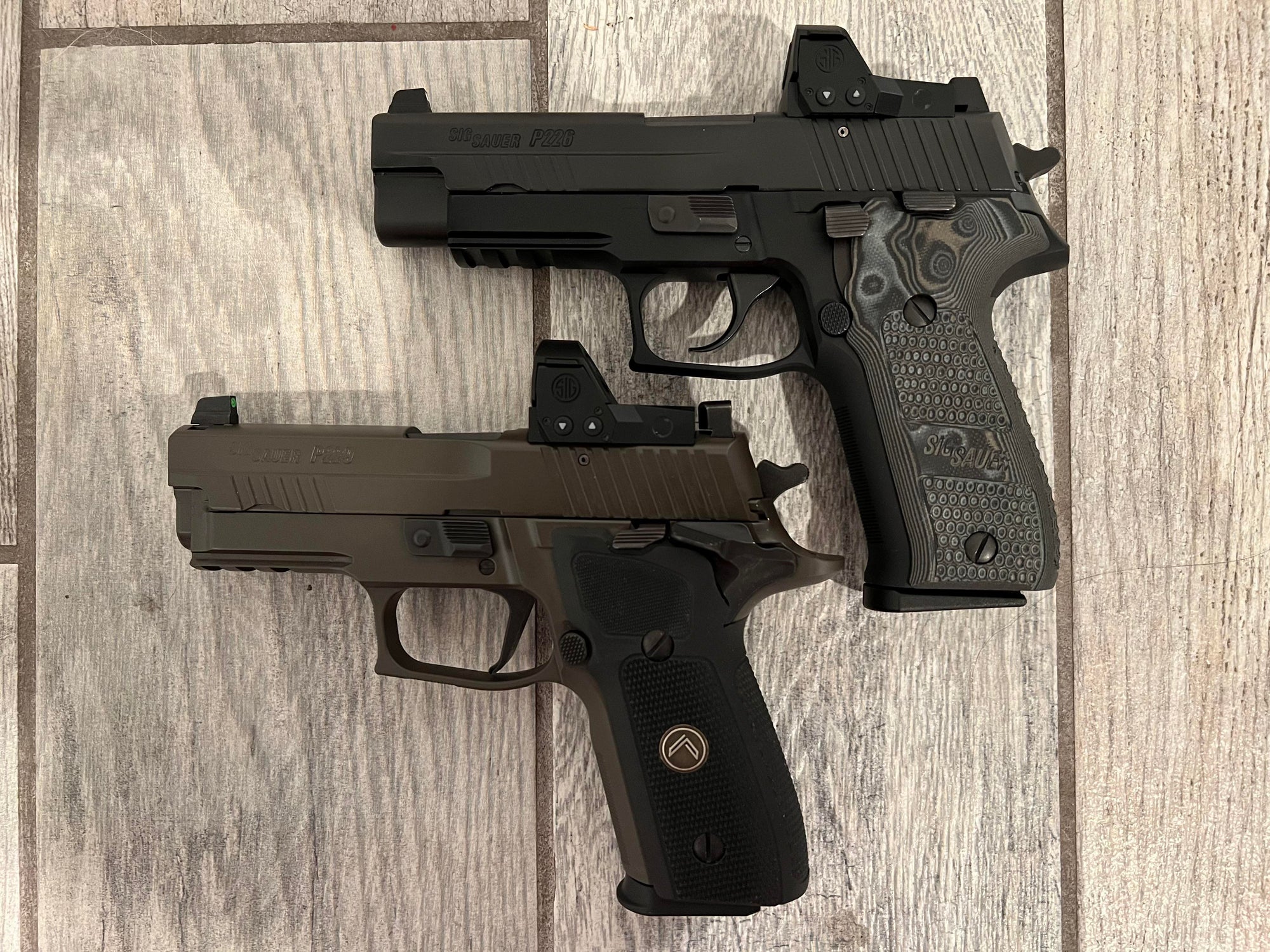
- Double-Action/Single-Action (DA/SA): The first shot is fired double-action (long, heavy pull that cocks and releases the hammer). Subsequent shots are fired single-action (short, light pull) because the cycling slide re-cocks the hammer. The SIG P226, Beretta 92, and CZ 75 are classic examples.
Common hammer-fired pistols: 1911 (SAO), SIG Sauer P226/P229 (DA/SA), Beretta 92/M9 (DA/SA), CZ 75 (DA/SA or SAO), HK USP (DA/SA), Walther PPK (DA/SA), revolvers (DAO or SA).
The Trigger: Where the Difference Matters Most
Striker-Fired Trigger Characteristics
Striker-fired triggers are designed around a fundamental constraint: the trigger must both complete the striker's compression and release it in a single motion. This creates a trigger with more pre-travel (take-up) than a single-action hammer-fired trigger, and typically a heavier pull weight.
Typical striker-fired trigger characteristics:
- Pull weight: 5–7 pounds (varies by manufacturer and model)
- Pre-travel: Moderate to significant (the "mushy" take-up that Glock owners often upgrade)
- Break: Consistent but not as crisp as single-action hammer-fired
- Reset: Varies — some striker-fired triggers (Walther PPQ, HK VP9) have excellent resets; others (standard Glock) are adequate but not exceptional
- Consistency: The same pull weight and feel on every shot — no first-shot/subsequent-shot variation
The consistency advantage is significant for defensive use. A striker-fired trigger feels the same on shot one as it does on shot fifteen. There's no mental adjustment required between a heavy first pull and lighter subsequent pulls.
Hammer-Fired Trigger Characteristics
Hammer-fired triggers vary dramatically based on the action type:
Single-Action (1911-style):
- Pull weight: 3.5–5 pounds (quality examples)
- Pre-travel: Minimal to none
- Break: Crisp, glass-rod feel in quality examples
- Reset: Short and positive
- The benchmark against which all other pistol triggers are measured
Double-Action/Single-Action (DA/SA):
- First shot (DA): 10–12 pounds, long travel — the most challenging trigger pull in common use
- Subsequent shots (SA): 4–6 pounds, short travel — significantly lighter and crisper
- The transition between DA and SA requires training and mental awareness
- Mastered DA/SA shooters can be extremely accurate; the learning curve is real
Double-Action Only (DAO):
- Pull weight: 8–12 pounds, consistent on every shot
- Long, heavy pull that's consistent but demanding
- Common in revolvers; less common in modern semi-automatics
The Trigger Verdict
For pure trigger quality, the single-action hammer-fired pistol (1911) wins. The SAO trigger's light weight, minimal pre-travel, and crisp break are the benchmark that striker-fired manufacturers have been trying to replicate for decades.
For consistency across all shots, striker-fired wins. The same pull weight and feel on every shot eliminates the DA/SA transition problem and simplifies training.
For the worst trigger experience, DA/SA on the first shot is the most challenging — but experienced DA/SA shooters argue that the discipline required to master the DA pull makes them better shooters overall.
Safety Systems: A Critical Difference
Striker-Fired Safety Philosophy
Most striker-fired pistols rely on internal passive safeties rather than external manual safeties. The Glock's "Safe Action" system, for example, uses three internal safeties (trigger safety, firing pin safety, drop safety) that are all automatically disengaged by a proper trigger press and automatically re-engaged when the trigger is released.
The result: a pistol that is safe to carry with a round chambered without any manual safety manipulation, and that is immediately ready to fire with a single trigger press. No safety to disengage under stress. No safety to forget to disengage under stress.
This simplicity is the primary reason striker-fired pistols dominate law enforcement. Training officers to consistently disengage a manual safety under stress is difficult and failure-prone. Eliminating the external safety eliminates that failure mode.
Hammer-Fired Safety Philosophy
Hammer-fired pistols use a variety of safety systems that reflect their different action types:
Single-Action (1911): Requires a manual thumb safety and grip safety. Carried "cocked and locked" (hammer back, safety on, round chambered). The safety must be swept off during the draw stroke — a motion that must be trained until automatic. The exposed cocked hammer provides a visual and tactile indicator of the pistol's condition.
DA/SA: The long, heavy double-action first pull serves as a de facto safety — it's difficult to fire accidentally because the trigger pull is so heavy. Many DA/SA pistols also include a decocker that safely lowers the hammer without firing, allowing safe carry with the hammer down and a round chambered. The first shot is then fired double-action.
The hammer visibility advantage: External hammer-fired pistols provide a visual and tactile indicator of the pistol's condition that striker-fired pistols cannot match. You can see and feel whether the hammer is cocked or decocked. This mechanical transparency is valued by experienced shooters who want to know their pistol's exact condition at a glance.
The Safety Verdict
For simplicity and stress-proof operation, striker-fired wins. No external safety to manage means one less thing to fail under stress.
For mechanical transparency and condition awareness, external hammer-fired wins. You can see and feel the pistol's condition in a way that striker-fired pistols don't allow.
For the most forgiving carry system for new shooters, DA/SA's heavy first pull provides a meaningful accidental discharge barrier without requiring manual safety manipulation.
Reliability: The Real-World Record
Striker-Fired Reliability
Modern striker-fired pistols from quality manufacturers are extremely reliable. The Glock's reputation for functioning in adverse conditions — dirty, wet, frozen, neglected — is well-documented and largely accurate. The simpler mechanism with fewer parts means fewer potential failure points.
Striker-fired pistols are generally more tolerant of neglect than hammer-fired designs. The fewer moving parts and simpler mechanism mean less to go wrong when maintenance is deferred. For law enforcement and military applications where maintenance schedules may be inconsistent, this tolerance is a meaningful advantage.
Hammer-Fired Reliability
Quality hammer-fired pistols are equally reliable when properly maintained. The Beretta M9 served as the U.S. military's standard sidearm for 35 years — a reliability record that speaks for itself. The 1911 served for 74 years. The SIG P226 is trusted by Navy SEALs.
The reliability difference between quality striker-fired and quality hammer-fired pistols is minimal in practice. Both will function reliably when maintained properly. The striker-fired advantage is primarily in tolerance of neglect — a factor that matters more in some contexts than others.
Where hammer-fired pistols can have a reliability advantage: the external hammer allows manual override in the event of a light primer strike. If a round fails to fire, you can manually re-cock the hammer and attempt a second strike — a "tap-rack" alternative that striker-fired pistols don't offer. In practice, this advantage is rarely relevant with quality ammunition.
Concealability and Carry Considerations
Striker-Fired for Carry
Striker-fired pistols have a significant concealability advantage: no external hammer to snag on clothing during the draw. The smooth, snag-free profile of a striker-fired pistol is particularly valuable for concealed carry, where the draw must clear clothing quickly and reliably.
The consistent trigger pull of striker-fired pistols also simplifies concealed carry training. There's no first-shot/subsequent-shot variation to account for, no safety to disengage, and no hammer condition to check. The pistol is always in the same condition when holstered: striker partially compressed, internal safeties engaged, ready to fire with a single trigger press.
Hammer-Fired for Carry
External hammer-fired pistols present specific carry considerations:
Single-Action (1911): Carried cocked and locked, which requires confidence in the thumb safety and training to disengage it reliably under stress. The exposed hammer can potentially snag on clothing, though this is rarely a practical problem with proper holster selection. The 1911's slim single-stack profile is a concealability advantage that partially offsets the hammer concern.
DA/SA: Typically carried with the hammer decocked and a round chambered. The first shot is fired double-action. The heavy DA pull provides a safety margin, but the transition to SA for subsequent shots requires training. The exposed hammer can snag on clothing if the holster doesn't provide adequate coverage.
Internal hammer: Some hammer-fired pistols use internal (concealed) hammers that provide the mechanical advantages of hammer-fired operation without the snag risk. The SIG P365 uses an internal hammer design that combines hammer-fired reliability with striker-fired concealability.
Training Implications: What Each System Demands
Striker-Fired Training Requirements
Striker-fired pistols have the lowest training barrier of any action type. The consistent trigger pull, absence of external safety, and simple manual of arms (load, rack, shoot) make them the most accessible option for new shooters and the most practical for shooters who train infrequently.
The training focus for striker-fired pistols is on fundamentals: grip, stance, sight alignment, trigger control, and draw stroke. There are no action-specific techniques to master beyond these basics.
The limitation: the striker-fired trigger's pre-travel and heavier pull weight can mask poor trigger technique. Shooters who develop their skills on striker-fired pistols sometimes find that they've been compensating for the trigger rather than developing clean technique. This is why some instructors recommend learning on a single-action trigger first.
Hammer-Fired Training Requirements
Single-Action (1911): Requires training to disengage the thumb safety reliably during the draw stroke. This motion must be automatic — a safety that isn't disengaged under stress is a pistol that won't fire when needed. The training investment is real but manageable for dedicated shooters. The reward is the best factory trigger available, which accelerates accuracy development.
DA/SA: The most demanding training requirement of any common action type. The shooter must master two different trigger pulls — the long, heavy DA first shot and the short, light SA subsequent shots — and the transition between them. Many experienced shooters argue that mastering DA/SA makes you a better shooter overall because it demands more precise trigger control. The learning curve is real and significant.
The DA/SA transition is the most common source of first-shot misses among new DA/SA shooters. The heavy DA pull causes anticipation (flinching in advance of the shot), which throws the first shot low. Overcoming this requires dedicated dry fire practice with the DA pull specifically.
Who Shoots Each Action Type: Community Perspectives
Why Experienced Shooters Often Prefer Hammer-Fired
The concealed carry and competitive shooting communities include many experienced shooters who prefer hammer-fired pistols despite — or because of — their additional complexity. Their reasoning is consistent:
"The trigger makes me more accurate." The 1911's single-action trigger, in particular, enables a level of precision that striker-fired triggers don't match. Shooters who have developed their skills on a quality SAO trigger often find striker-fired triggers feel imprecise by comparison.
"I can see what my gun is doing." The external hammer provides mechanical transparency that striker-fired pistols don't offer. Experienced shooters value knowing their pistol's exact condition at a glance — cocked, decocked, or somewhere in between.
"The DA/SA discipline made me a better shooter." Mastering the DA/SA transition requires developing trigger control skills that transfer to all shooting. Shooters who've put in the work to master DA/SA often shoot striker-fired pistols better than those who've only trained on striker-fired.
"I trust what I know." Shooters who have carried DA/SA pistols for decades have built deep familiarity with their platform's operation. Switching to striker-fired would require rebuilding muscle memory that's been reliable for years.
Why Most New Shooters and Law Enforcement Choose Striker-Fired
The striker-fired pistol's dominance in new shooter recommendations and law enforcement adoption reflects equally valid reasoning:
Simplicity under stress. The consistent trigger pull and absence of external safety eliminate variables that can cause failures under the adrenaline and cognitive load of a defensive encounter. Simpler is more reliable when stress degrades fine motor skills.
Faster to competence. New shooters reach functional defensive competence faster with striker-fired pistols because there are fewer technique elements to master. The training investment required for DA/SA or 1911 carry is real and significant.
Institutional momentum. Law enforcement agencies that have trained thousands of officers on Glock or M&P platforms have enormous institutional investment in striker-fired training. Switching to hammer-fired would require retraining entire departments.
Modern trigger quality. The best striker-fired triggers — Walther PPQ/PDP, HK VP9, SIG P320 X-series — have significantly closed the gap with hammer-fired triggers. For shooters who don't need the absolute best trigger, modern striker-fired options are excellent.
The Specific Platforms: What to Consider
Best Striker-Fired Options for Carry
Glock 19 (9mm, 15+1): The universal standard. Proven reliability, deepest aftermarket, most holster options. The default recommendation for most new carriers. WARRIORLAND's Glock 17/19 IWB Kydex holster with claw and optic cut and IWB Kydex holster for appendix carry cover the full range of Glock 19 carry configurations.
SIG Sauer P320 (9mm, 17+1): Modular design, U.S. military adoption (M17/M18), excellent ergonomics. The strongest Glock alternative in the striker-fired category. WARRIORLAND's SIG P320 IWB Kydex holster with claw and optic cut provides a precision-fit carry solution for P320 Compact/M18 and Full-Size/M17 configurations.
Springfield Armory Hellcat Pro (9mm, 15+1): Maximum capacity in a compact frame, excellent grip texture, factory optics-ready. WARRIORLAND's Hellcat Pro IWB Kydex holster with claw and optic cut and Hellcat Pro/Hellcat/RDP/OSP IWB hybrid holster cover both Kydex and leather-backed carry options.
Best Hammer-Fired Options for Carry
1911 Commander (SAO, .45 ACP or 9mm, 8+1): The benchmark trigger, slim single-stack profile, proven reliability. Best for experienced shooters willing to invest in training. WARRIORLAND's carbon fiber Kydex 1911 IWB holster and colorful carbon fiber 1911 IWB holster provide precision-fit carry solutions for the standard 5" no-rail 1911 platform.
SIG Sauer P226/P229 (DA/SA, 9mm/.40, 15+1): Trusted by law enforcement and military worldwide. Excellent build quality, proven reliability, the DA/SA platform that most shooters learn on. Requires dedicated training for the DA/SA transition.
CZ 75 (DA/SA or SAO, 9mm, 16+1): Exceptional ergonomics, excellent factory trigger in SAO configuration, competitive pricing. A favorite among experienced shooters who want hammer-fired quality at accessible prices.
The Multi-Platform Solution
For shooters who want to experience both action types without committing to separate holster ecosystems, WARRIORLAND's IWB carbon fiber Kydex holster compatible with G17/19, G43/43X MOS, P365/P365X, P320, Taurus G2C/G3C, M&P 9mm M2.0, M&P Shield, Springfield Hellcat, and 1911 5" no-rail covers both striker-fired and hammer-fired platforms in a single product line — allowing you to try different platforms without buying new holsters for each.
Making the Decision: A Framework
Choose Striker-Fired If:
- You're a new shooter who wants the fastest path to defensive competence
- You train infrequently and want a system that's forgiving of inconsistent practice
- You prioritize simplicity and consistency over trigger quality
- You want the broadest possible holster and aftermarket options
- You carry in conditions where a snag-free profile matters
- You want law enforcement-proven reliability with minimal maintenance demands
- You're not willing to invest in the training that DA/SA or 1911 carry requires
Choose Hammer-Fired If:
- Trigger quality is your highest priority and you're willing to pay for it in training time
- You shoot regularly and have the discipline to maintain a more demanding platform
- You want the mechanical transparency of an external hammer
- You compete in divisions where single-action triggers provide a competitive advantage
- You're an experienced shooter who has already mastered DA/SA or 1911 carry
- You value the DA/SA's heavy first pull as an additional safety margin
- You want to carry a .45 ACP 1911 for its terminal performance characteristics
The Honest Bottom Line
Striker-fired pistols dominate the market because they're genuinely better for most people in most situations. The simplicity, consistency, and low training barrier are real advantages that matter for the majority of concealed carriers who train occasionally rather than obsessively.
Hammer-fired pistols remain relevant because they offer genuine advantages that striker-fired designs haven't fully replicated: the single-action trigger's quality, the DA/SA's mechanical transparency, and the 1911's combination of trigger feel and ergonomics. For experienced shooters who train regularly and are willing to invest in platform-specific technique, hammer-fired pistols reward that investment.
The worst choice is the one you make based on what someone else prefers rather than what fits your training commitment, your body, and your carry context. Try both. Shoot both. Choose the one you shoot better and will carry consistently.
Conclusion: Action Type Is a Tool, Not an Identity
The striker-fired vs hammer-fired debate generates more heat than light because people treat their action type preference as an identity rather than a tool selection. It isn't. Both action types are legitimate, proven, and capable of serving defensive purposes effectively in the right hands with the right training.
The striker-fired pistol's dominance reflects the reality that most people benefit from its simplicity. The hammer-fired pistol's continued presence reflects the reality that experienced, dedicated shooters can extract performance from it that striker-fired designs don't match.
Choose your action type based on your training commitment, your experience level, and your carry context. Then get a quality holster, train with your setup, and carry consistently. The action type matters less than the training and the consistency.
WARRIORLAND's holster lineup covers both action types across the most popular platforms — from Glock 19 IWB Kydex to SIG P320 IWB with claw to 1911 carbon fiber IWB. Whatever action type you choose, carry it in a holster that matches its quality and your carry position. Build the complete system. Train with it. Carry every day.