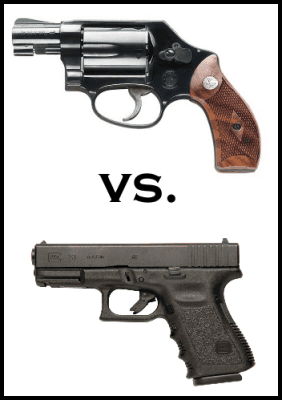

The Oldest Debate in Defensive Handguns
The revolver versus semi-automatic pistol debate has been running for more than a century — since the first reliable semi-automatic pistols appeared in the late 1800s and began challenging the revolver's dominance as the standard defensive sidearm. Law enforcement agencies debated it for decades before largely standardizing on semi-automatics in the 1980s and 1990s. Civilian carriers debate it today on forums, at ranges, and in gun stores across the country.
The debate persists because both platforms have genuine strengths and genuine weaknesses, and because the right answer depends on factors that vary from shooter to shooter: hand size, grip strength, training commitment, carry context, and the specific scenarios the carrier is preparing for. There is no universal winner. There is only the platform that fits your specific situation.
This guide covers both platforms honestly — their mechanical differences, their practical advantages and limitations, and the carry contexts where each performs best — so you can make an informed decision rather than simply choosing the platform that looks cooler or that your favorite instructor happens to prefer.
How Each Platform Works: The Mechanical Foundation
The Revolver: Rotating Cylinder, Mechanical Simplicity
A revolver stores cartridges in a rotating cylinder — typically holding 5, 6, or 7 rounds depending on the caliber and frame size. When the trigger is pressed (in double-action mode) or the hammer is manually cocked (in single-action mode), the cylinder rotates to align the next cartridge with the barrel, the hammer falls, and the cartridge fires. The spent case remains in the cylinder until the shooter manually ejects it.
The revolver's operating system is mechanically straightforward: the trigger pull rotates the cylinder and drops the hammer in a single continuous motion. There is no slide to cycle, no magazine to seat, no chamber to verify. The mechanical linkage between trigger and firing mechanism is direct and robust, with fewer components than a semi-automatic pistol and fewer potential failure points.
Modern revolvers are almost exclusively double-action designs — the trigger both cocks and drops the hammer — though most can also be fired in single-action mode by manually cocking the hammer for a lighter, shorter trigger pull. The double-action trigger pull is typically 10–12 pounds, significantly heavier than most semi-automatic triggers, which requires more deliberate trigger pressure to fire.
The Semi-Automatic Pistol: Magazine-Fed, Self-Cycling
A semi-automatic pistol stores cartridges in a detachable magazine that feeds into the grip. When the trigger is pressed, the firing pin or striker hits the cartridge primer, the cartridge fires, and the energy from the fired cartridge cycles the slide rearward — ejecting the spent case and chambering the next round from the magazine. The pistol is ready to fire again with the next trigger press, without any manual action from the shooter.
Semi-automatic pistols use various trigger systems — double-action/single-action (DA/SA), striker-fired, and single-action only — each with different trigger characteristics and manual of arms requirements. The most common modern carry pistols use striker-fired systems (Glock, SIG P320, M&P) that offer a consistent trigger pull across all shots without manual safety manipulation.
The semi-automatic's self-cycling action means the shooter only needs to press the trigger for each shot — the pistol handles chambering, extraction, and ejection automatically. This automation enables higher capacity and faster reloading than revolvers, at the cost of greater mechanical complexity.
Capacity: The Number That Defines the Debate
Revolver Capacity: 5 to 7 Rounds
Standard defensive revolvers hold 5 rounds (small-frame snub-nose revolvers like the Smith & Wesson J-frame) or 6 rounds (medium and large-frame revolvers). Some modern designs hold 7 or 8 rounds, but these are larger, heavier guns that sacrifice the revolver's primary carry advantage — compact size — for additional capacity.
Five or six rounds is the realistic capacity for a carry revolver. This is sufficient for the vast majority of defensive encounters — most defensive uses of a firearm involve fewer than three shots — but it leaves less margin than a semi-automatic pistol in scenarios involving multiple adversaries or extended engagements.
Semi-Automatic Capacity: 10 to 17+ Rounds
Modern semi-automatic carry pistols offer dramatically higher capacity than revolvers. The Glock 19 carries 15+1 rounds; the SIG P365 carries 10+1 in its flush-fit magazine; the full-size Glock 17 carries 17+1. Even the smallest semi-automatic carry pistols typically offer 6–10 rounds — comparable to or exceeding the revolver's capacity in a similar or smaller package.
The capacity advantage of semi-automatics is most significant in two scenarios: engagements requiring multiple shots (where the revolver's limited capacity may require a reload under stress) and situations where a reload is needed quickly (where the semi-automatic's magazine swap is faster than the revolver's cylinder reload). For most civilian defensive encounters, the capacity difference is less critical than it appears — but it's a real advantage that shouldn't be dismissed.
Reliability: The Revolver's Most Cited Advantage
The Revolver's Reliability Argument
The revolver's most frequently cited advantage is reliability — specifically, its resistance to the types of malfunctions that affect semi-automatic pistols. A semi-automatic pistol can malfunction in several ways: failure to feed (the next round doesn't chamber), failure to eject (the spent case doesn't clear the chamber), stovepipe (the spent case gets caught in the ejection port), and double-feed (two rounds try to enter the chamber simultaneously). These malfunctions require specific clearance procedures to resolve — procedures that must be practiced until they're automatic.
A revolver, by contrast, has a much simpler failure mode: if a round doesn't fire, press the trigger again. The cylinder rotates to the next round, and the pistol fires. There's no slide to cycle, no case to eject, no feed ramp to clear. The revolver's mechanical simplicity means that most failures — a dud primer, a light strike — are resolved by the next trigger press rather than requiring a manual clearance procedure.
This reliability advantage is real but often overstated. A quality semi-automatic pistol from a reputable manufacturer, properly maintained and fed quality ammunition, is extremely reliable — malfunctions are rare events, not routine occurrences. The revolver's reliability advantage is most meaningful in scenarios where maintenance is neglected, ammunition quality is inconsistent, or the shooter hasn't practiced malfunction clearance procedures.
The Semi-Automatic's Reliability Reality
Modern semi-automatic pistols — particularly the Glock, SIG P320, and M&P platforms that dominate the law enforcement and civilian carry markets — have demonstrated reliability records that rival or exceed revolvers in controlled testing. The Glock's loose tolerances and simple design allow it to function in conditions that would cause more precisely fitted pistols to malfunction. The SIG P320's modular design has been tested to hundreds of thousands of rounds without failure.
The semi-automatic's reliability concern is most relevant with budget pistols from less reputable manufacturers, with pistols that haven't been properly maintained, or with ammunition that doesn't meet the pistol's specifications. For carriers who choose quality platforms and maintain them properly, the reliability difference between revolvers and semi-automatics is minimal in practice.
Trigger: Double-Action Revolver vs. Striker-Fired Pistol
The Revolver's Double-Action Trigger
The double-action revolver trigger is long, heavy, and consistent — typically 10–12 pounds of pull weight across a travel distance of half an inch or more. This heavy pull is a safety feature: it's difficult to fire accidentally, and the long travel gives the shooter time to abort the shot if the trigger is pressed unintentionally.
The double-action trigger's weight and travel make it more difficult to shoot accurately than a lighter, shorter trigger. Mastering the double-action trigger pull — pressing it smoothly without disturbing the sight picture — requires significant practice. Experienced revolver shooters can achieve excellent accuracy with double-action triggers, but it takes more training than comparable accuracy with a striker-fired pistol.
The Striker-Fired Pistol's Consistent Pull
Modern striker-fired pistols offer a consistent trigger pull of approximately 5–6 pounds across all shots — lighter than a double-action revolver but heavier than a single-action pistol. The pull is shorter and more consistent than a double-action revolver trigger, making it easier to shoot accurately with less practice.
The striker-fired trigger's lighter pull means it requires more disciplined trigger finger discipline than a double-action revolver — the lower pull weight makes accidental discharges more likely if the shooter's finger is on the trigger when it shouldn't be. This is the trade-off: easier to shoot accurately, but requiring more careful trigger discipline.
Reloading: Speed and Simplicity Under Stress
Revolver Reloading: Slower but Simpler
Reloading a revolver requires opening the cylinder, ejecting the spent cases (using the ejector rod), and loading fresh rounds. With a speedloader — a device that holds all rounds in the correct orientation for simultaneous loading — an experienced shooter can reload a revolver in 3–5 seconds. Without a speedloader, loading individual rounds takes significantly longer.
Revolver reloading is slower than semi-automatic magazine changes under most conditions, and it's more affected by stress and fine motor skill degradation. The speedloader must be aligned correctly with the cylinder chambers; under stress, this alignment can be difficult to achieve quickly. Speed strips (flat strips holding rounds in a row) are more compact than speedloaders but slower to use.
Semi-Automatic Reloading: Fast and Consistent
Reloading a semi-automatic pistol requires dropping the empty magazine, inserting a fresh magazine, and releasing the slide. With practice, this can be accomplished in 1–2 seconds — significantly faster than a revolver reload. The magazine change is also more consistent under stress: the magazine indexes into the grip naturally, and the motion is a gross motor skill that remains reliable even when fine motor skills degrade.
The semi-automatic's faster reload is most significant in scenarios where a reload is needed quickly — which, for civilian defensive use, is rare. Most defensive encounters are resolved with the rounds already in the pistol. But the faster reload provides a meaningful margin in scenarios where it is needed.
Concealability and Carry Comfort
The Snub-Nose Revolver: The Original Pocket Gun
Small-frame revolvers — the Smith & Wesson J-frame, the Ruger LCR, the Taurus 856 — are among the most concealable defensive handguns available. Their rounded profile (no sharp edges, no protruding controls) makes them comfortable to carry in a pocket without snagging on clothing. The absence of a slide means there's nothing to print through clothing in the way that a semi-automatic's slide can.
The snub-nose revolver's concealability advantage is most significant for pocket carry — a carry method that's difficult with most semi-automatic pistols due to their slide profile. For waistband carry (IWB or OWB), the revolver's cylinder creates a wider profile than a single-stack semi-automatic, partially offsetting the concealability advantage.
Semi-Automatic Concealability: Slim and Versatile
Modern micro-compact semi-automatic pistols — the SIG P365, the Springfield Armory Hellcat, the Glock 43 — offer concealability that rivals or exceeds small-frame revolvers in most carry positions. The single-stack or staggered-column designs of these pistols produce a slim profile that conceals well in IWB holsters, particularly for appendix carry.
The semi-automatic's versatility across carry positions — IWB, OWB, appendix, strong-side hip — is a practical advantage over the revolver, which is most naturally suited to strong-side hip or pocket carry. The wide ecosystem of holsters available for popular semi-automatic platforms provides more carry options than the more limited holster selection for revolvers.
Ease of Use: Which Platform Is More Accessible?
The Revolver's Accessibility Advantage
For new shooters, older shooters, or shooters with limited hand strength, the revolver offers several accessibility advantages. The manual of arms is simpler: load, point, press trigger. There's no slide to rack (which requires significant hand strength and can be difficult for shooters with arthritis or limited grip strength), no magazine to seat, no safety to disengage. The revolver is ready to fire as soon as it's loaded.
The double-action trigger's heavy pull, while a disadvantage for accuracy, is a safety advantage for shooters who are less experienced with trigger discipline. The heavy pull provides a natural barrier against accidental discharge that doesn't require a manual safety.
For home defense applications where the firearm may be accessed by multiple family members with varying levels of firearms experience, the revolver's simple manual of arms is a genuine advantage. A family member who has never trained with a semi-automatic pistol can operate a revolver with minimal instruction.
The Semi-Automatic's Learning Curve
Semi-automatic pistols require more training to operate correctly under stress. Racking the slide, seating the magazine, managing malfunctions, and (for DA/SA pistols) managing the trigger transition from double-action to single-action all require practice to perform reliably under stress. New shooters who don't train regularly may find the semi-automatic's manual of arms more demanding than the revolver's.
However, the semi-automatic's learning curve is not steep for motivated shooters. The fundamental skills — grip, stance, trigger press, sight alignment — are the same for both platforms. The additional skills required for semi-automatic operation (slide manipulation, magazine changes, malfunction clearance) are learnable with modest training investment.
Caliber Options and Terminal Performance
Revolver Calibers: From .22 to .500
Revolvers are available in a wider range of calibers than semi-automatic pistols, from the mild .22 LR to the formidable .500 S&W Magnum. For defensive carry, the most common revolver calibers are .38 Special (the standard for small-frame revolvers), .357 Magnum (which provides significantly more power in medium-frame revolvers), and .44 Special/.44 Magnum for larger-frame guns.
The .357 Magnum is the revolver's strongest defensive caliber argument: it produces terminal performance that exceeds most semi-automatic pistol cartridges, with proven stopping power in a package that fits in a medium-frame revolver. For carriers who prioritize terminal performance over capacity, the .357 Magnum revolver is a compelling choice.
Semi-Automatic Calibers: 9mm Dominates
Modern semi-automatic defensive pistols are dominated by 9mm, which has become the standard for law enforcement and civilian carry due to its combination of manageable recoil, adequate terminal performance with modern hollow-point ammunition, and high capacity. .40 S&W and .45 ACP remain popular alternatives, offering larger diameter bullets at the cost of reduced capacity and increased recoil.
Modern 9mm defensive ammunition — Federal HST, Speer Gold Dot, Hornady Critical Defense — has narrowed the terminal performance gap between 9mm and larger calibers significantly. The FBI's 2014 return to 9mm from .40 S&W, based on ballistic testing showing comparable terminal performance with better capacity and reduced recoil, reflects the current consensus among professional users.
Who Should Choose a Revolver
The revolver is the right choice for carriers who:
- Have limited hand strength and struggle to rack a semi-automatic slide. The revolver requires no slide manipulation — load and fire.
- Prefer pocket carry as their primary carry method. The snub-nose revolver's rounded profile is better suited to pocket carry than most semi-automatics.
- Want maximum simplicity in their defensive tool. The revolver's manual of arms is the simplest available in a defensive handgun.
- Prioritize the .357 Magnum's terminal performance and are willing to accept the capacity trade-off for the power advantage.
- Are providing a firearm for a family member with minimal training who needs a simple, reliable defensive tool.
- Carry in environments where maintenance is difficult and want the most mechanically robust option available.
Who Should Choose a Semi-Automatic Pistol
The semi-automatic pistol is the right choice for carriers who:
- Want maximum capacity in a practical carry package. Modern micro-compact semi-automatics offer 10–17 rounds in packages smaller than many revolvers.
- Train regularly and are willing to invest in the skills required to operate a semi-automatic correctly under stress.
- Carry in a holster (IWB, OWB, or appendix) rather than a pocket. The semi-automatic's holster ecosystem is vastly larger than the revolver's.
- Want faster reloads and the ability to carry spare magazines for extended capacity.
- Prefer a lighter trigger for more precise shooting. The striker-fired trigger is easier to shoot accurately than a double-action revolver trigger.
- Want the widest accessory ecosystem — weapon lights, laser aiming devices, red dot sights, and holsters are all more widely available for popular semi-automatic platforms than for revolvers.
The Accessory Ecosystem: Where Semi-Automatics Have a Clear Edge
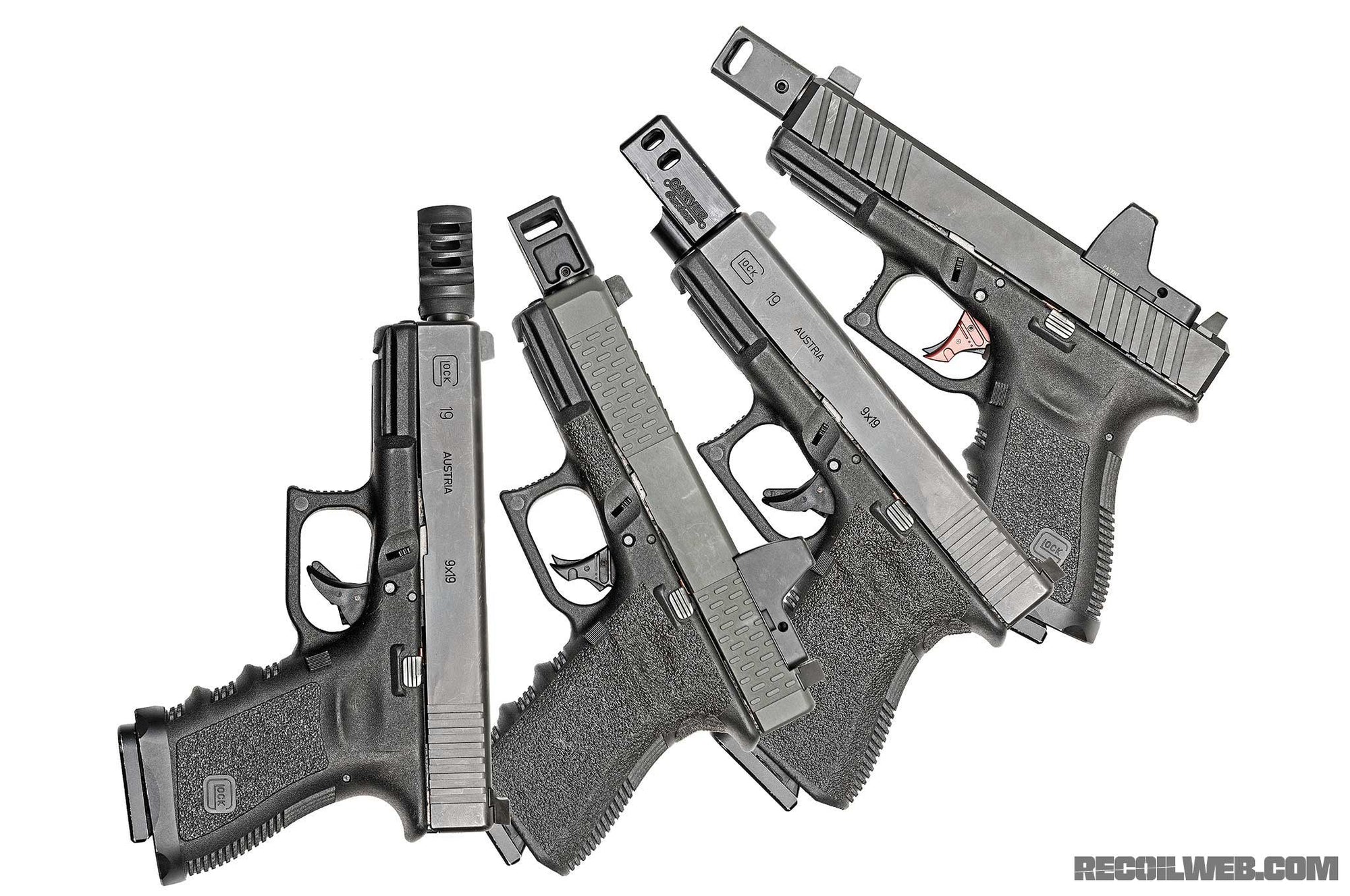
One practical advantage of semi-automatic pistols that's rarely discussed in the revolver vs. pistol debate is the accessory ecosystem. Popular semi-automatic platforms — the Glock 17/19, SIG P365, Springfield Hellcat, S&W M&P Shield — have extensive ecosystems of weapon lights, laser aiming devices, red dot sights, and holsters that simply don't exist for revolvers.
Weapon lights for revolvers are rare and awkward — the cylinder prevents rail mounting in the standard position, and most revolver weapon light solutions are compromises. Red dot sights for revolvers exist but are uncommon and require gunsmith installation. The holster selection for revolvers is a fraction of what's available for popular semi-automatic platforms.
For carriers who want a complete defensive system — pistol, weapon light, laser, optic, and holster — the semi-automatic platform is the practical choice. WARRIORLAND's carry solutions are built around the most popular semi-automatic platforms:
For Glock Platform Carriers:
- Glock 17/19 Gen3-6 IWB Kydex Holster with Claw & Optic Cut — Appendix Carry — Inside-waistband appendix carry holster with claw and optic cut. Adjustable cant and retention for the most popular semi-automatic carry platform.
- Glock 17/19 Gen3-6 IWB Kydex Holster with Claw Attachment & Optic Cut — Platform-specific IWB holster with claw and optic cut. Adjustable cant and retention, right-hand draw.
- Glock 17/19/26/34 IWB Kydex Holster with Claw — Concealed Carry — IWB appendix concealed carry holster with claw, adjustable retention and cant for the full Glock compact/full-size family.
- WARRIORLAND FDE MA1 800-Lumen Pistol Light with Glock 17/19 Holster Combo — 800-lumen rechargeable weapon light with platform-specific Glock 17/19 holster. Screen power status display.
- WARRIORLAND MA2 — Universal 800-Lumen Rail-Mounted Pistol Light, Fits 60+ Handguns — 800-lumen rechargeable weapon light compatible with Glock 17/19, P365, M&P 9, 1911, and 60+ additional semi-automatic platforms.
For SIG SAUER Platform Carriers:
- SIG P365XL IWB Kydex Holster with Claw & Optic Cut — Platform-specific IWB holster for the P365XL with claw and optic cut. Adjustable cant and retention, right-hand draw.
- SIG P365/P365X/P365XL IWB Kydex Holster with Claw & Optic Cut — IWB holster with claw and optic cut for the P365 family. Adjustable cant and retention.
For Springfield Armory Platform Carriers:
- Hellcat Pro IWB Kydex Holster with Claw & Optic Cut — Platform-specific IWB holster for the Hellcat Pro with claw and optic cut. Right-hand draw, adjustable retention.
- FDE MA1 Green Laser/LED Combo with Hellcat Pro Holster — 800-lumen green laser and LED weapon light with platform-specific Hellcat Pro IWB holster. Rechargeable with screen power indicator.
For Smith & Wesson M&P Platform Carriers:
- M&P Shield 9mm/Plus IWB Kydex Holster — Fits Shield Plus, Shield M2.0, Shield M1.0 — Inside-waistband concealed carry holster with adjustable cant and retention. Compatible across the Shield family.
- IWB Holster — M&P Shield 9mm & .40 / M&P Shield M2.0 Compact — Platform-specific IWB holster for the Shield 9mm and .40 caliber variants.
The Hybrid Approach: Using Both Platforms Strategically
Many experienced carriers don't choose exclusively between revolvers and semi-automatics — they use both platforms strategically for different carry contexts:
- Primary carry: A semi-automatic pistol (Glock 19, SIG P365, M&P Shield Plus) in an IWB holster for daily carry, offering maximum capacity and the full accessory ecosystem.
- Backup or pocket carry: A small-frame revolver (.38 Special or .357 Magnum) for situations where the primary pistol can't be carried — formal occasions, environments where printing is a concern, or as a backup to the primary pistol.
- Home defense: A medium-frame revolver in .357 Magnum for a family member who isn't comfortable with semi-automatic operation, providing reliable defensive capability with minimal training requirement.
This hybrid approach uses each platform where it performs best rather than forcing a single solution across all defensive contexts.
Conclusion: The Right Tool for the Right Context
The revolver vs. semi-automatic debate doesn't have a universal answer because the two platforms optimize for different priorities. The revolver offers mechanical simplicity, reliable operation with minimal training, and the .357 Magnum's terminal performance. The semi-automatic offers higher capacity, faster reloads, a lighter trigger, and a vastly larger accessory ecosystem.
For most modern defensive carriers who train regularly and carry in a holster, the semi-automatic pistol is the practical choice — its capacity, accessory ecosystem, and holster options make it the more versatile defensive tool. For carriers who prioritize simplicity, have limited hand strength, or primarily pocket carry, the revolver remains a legitimate and capable defensive choice.
Whatever platform you choose, build the complete system around it: the right holster, the right weapon light, and the training to use both effectively under stress. WARRIORLAND's semi-automatic carry solutions — from Glock platform IWB holsters to universal weapon lights compatible with 60+ semi-automatic platforms — provide the carry infrastructure for the most popular defensive pistol platforms. Choose your platform. Build the system. Carry with confidence.