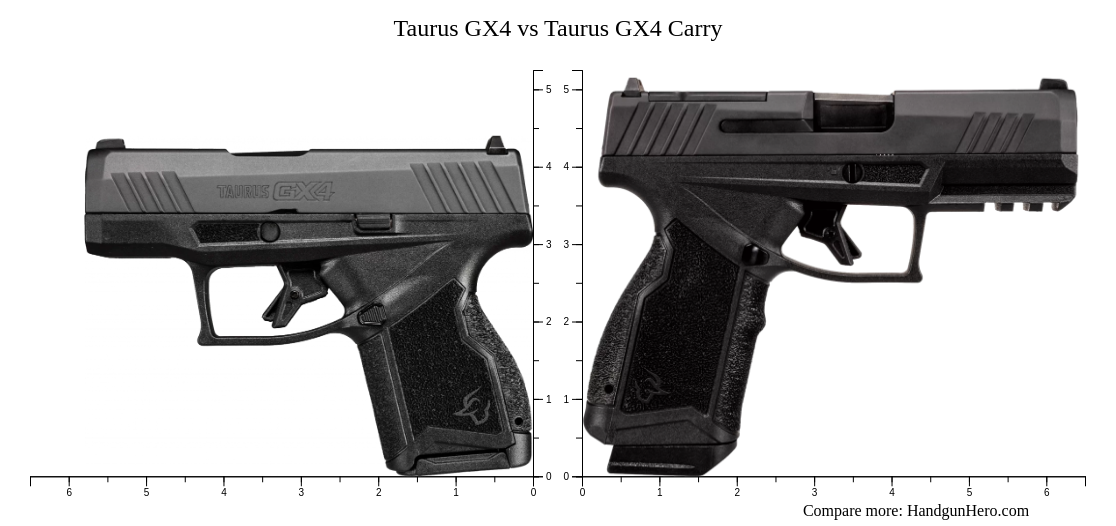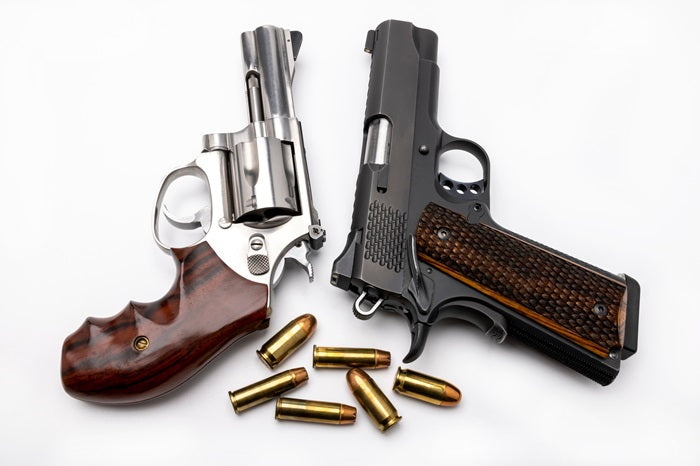

One Trigger Pull, Very Different Results
"Automatic" and "semi-automatic" are two of the most commonly misused terms in firearms discussions — in news coverage, in political debates, and even among people who own firearms. The confusion is understandable: both terms describe self-loading firearms that use the energy from a fired cartridge to cycle the action, and both are often lumped together under the umbrella of "automatic weapons" in popular discourse.
But the mechanical difference between full-automatic and semi-automatic fire is significant, and understanding it matters — for legal reasons, for practical shooting reasons, and for making informed decisions about the firearms you own or are considering purchasing. This guide explains how each firing mode works, what distinguishes them mechanically, their respective advantages and limitations, and the legal framework that governs their civilian ownership in the United States.
The Fundamental Distinction: What Happens After the Trigger Is Pressed
Semi-Automatic: One Press, One Round
A semi-automatic firearm fires one round per trigger press. When the trigger is pressed, the firing pin or striker hits the cartridge primer, the cartridge fires, and the energy from the fired cartridge — either from the propellant gas or from the recoil of the slide — cycles the action: ejecting the spent case and chambering the next round from the magazine. The firearm is then ready to fire again, but it will not fire until the trigger is released and pressed again.
This "one press, one round" relationship is the defining characteristic of semi-automatic operation. The firearm automates the loading, extraction, and ejection functions — the shooter doesn't need to manually operate a bolt or lever between shots — but the firing function remains under the shooter's direct control. Each shot requires a deliberate trigger press.
Semi-automatic operation is the standard for modern defensive pistols, sporting rifles, and many hunting firearms. The Glock 17, the SIG P320, the AR-15 in its standard civilian configuration, and the vast majority of firearms sold to civilians in the United States are semi-automatic.
Full-Automatic: One Press, Continuous Fire
A full-automatic firearm — also called a machine gun or select-fire weapon — continues firing as long as the trigger is held and ammunition remains in the magazine. One trigger press initiates a continuous firing cycle: the firearm fires, cycles, fires again, cycles again, and continues this sequence until the trigger is released or the magazine is empty.
Full-automatic operation is achieved through an additional mechanical component — typically called an auto sear or disconnector modification — that allows the firing mechanism to reset and fire again without the trigger being released. In a semi-automatic firearm, the disconnector catches the hammer or striker after each shot and holds it until the trigger is released; in a full-automatic firearm, this disconnector function is bypassed or modified to allow continuous fire.
Full-automatic firearms are standard equipment for military forces worldwide. The M4 carbine (the current U.S. military service rifle), the M249 Squad Automatic Weapon, and the M240 machine gun are all capable of full-automatic fire. Law enforcement agencies occasionally use select-fire weapons, but most law enforcement firearms are semi-automatic.
The Mechanical Difference: How the Disconnector Changes Everything
The Disconnector's Role in Semi-Automatic Operation
The disconnector is the key mechanical component that distinguishes semi-automatic from full-automatic operation. In a semi-automatic firearm, the disconnector catches the hammer (in hammer-fired designs) or the striker (in striker-fired designs) after each shot and holds it in the cocked position. The hammer or striker cannot fall again until the trigger is released, allowing the disconnector to reset, and the trigger is pressed again.
This disconnector function is what makes semi-automatic operation "semi" — the firearm automates everything except the trigger press itself. The shooter controls the rate of fire by controlling how quickly they press and release the trigger. A skilled shooter can fire a semi-automatic pistol very quickly — competitive shooters regularly achieve split times (time between shots) of 0.10–0.15 seconds — but each shot still requires a deliberate trigger press and release.
Full-Automatic: Bypassing the Disconnector
Full-automatic operation bypasses or modifies the disconnector function to allow the hammer or striker to fall again without the trigger being released. When the trigger is held, the firing cycle — fire, cycle, fire, cycle — continues automatically. The rate of fire is determined by the firearm's mechanical cycling speed rather than the shooter's trigger manipulation.
Full-automatic fire rates vary significantly by weapon design. A standard M4 carbine fires at approximately 800 rounds per minute in full-automatic mode — about 13 rounds per second. A pistol-caliber submachine gun may fire at 1,000–1,200 rounds per minute. A belt-fed machine gun may fire at 600–900 rounds per minute. These rates are theoretical maximums; in practice, full-automatic fire is used in short bursts rather than sustained fire to conserve ammunition and maintain control.
Select-Fire: The Military's Compromise
What Select-Fire Means
Most military service rifles are not purely full-automatic — they're select-fire, meaning they can be switched between semi-automatic and full-automatic (or burst) fire modes using a selector switch. The M4 carbine, for example, has three positions: safe, semi-automatic, and burst (three rounds per trigger press). Earlier M16 variants had a full-automatic setting rather than burst.
The burst mode on the M4 — which fires exactly three rounds per trigger press regardless of how long the trigger is held — was introduced because military experience showed that full-automatic fire was rarely effective in most combat scenarios. Soldiers tended to empty magazines quickly without achieving proportionally better results than controlled semi-automatic fire. The burst mode was intended to provide some automatic fire capability while limiting ammunition expenditure.
Why Militaries Use Full-Auto (and When They Don't)
Full-automatic fire has specific tactical applications where it provides genuine advantages over semi-automatic fire:
- Suppressive fire: Forcing an adversary to keep their head down while friendly forces maneuver. The volume of fire matters more than accuracy in this role.
- Close-quarters combat at very short range: In room-clearing scenarios at distances of a few meters, the ability to deliver multiple rounds instantly can be decisive.
- Crew-served weapons: Machine guns used to defend positions or provide sustained fire support are designed for full-automatic operation and are used with ammunition supplies that make sustained fire practical.
Outside these specific scenarios, military doctrine generally favors semi-automatic or burst fire over full-automatic. The reasons are practical: full-automatic fire is difficult to control (muzzle rise and recoil cause the weapon to climb rapidly, sending rounds progressively higher than the intended target), consumes ammunition rapidly, and is less accurate than aimed semi-automatic fire at most combat distances.
Rate of Fire: The Numbers Behind the Debate
Full-Automatic Rate of Fire
Full-automatic firearms fire at rates determined by their mechanical cycling speed — typically 600–1,200 rounds per minute for rifles and submachine guns, and up to 6,000 rounds per minute for some aircraft-mounted rotary cannons. At 800 rounds per minute (the M4's rate), a standard 30-round magazine is empty in approximately 2.25 seconds of sustained fire.
This rapid ammunition consumption is the primary practical limitation of full-automatic fire. A soldier carrying six 30-round magazines — 180 rounds total — could expend their entire ammunition supply in approximately 13 seconds of sustained full-automatic fire. This is why military doctrine emphasizes fire discipline and burst fire rather than sustained full-automatic operation.
Semi-Automatic Rate of Fire: Faster Than You Think
Semi-automatic fire is slower than full-automatic fire, but the difference is smaller than most people assume. A trained shooter can fire a semi-automatic pistol at 4–6 rounds per second — 240–360 rounds per minute — with reasonable accuracy. Competitive shooters in action shooting sports regularly demonstrate split times of 0.10–0.15 seconds between shots, which translates to 400–600 rounds per minute if sustained (which it isn't — these are short-duration bursts).
The practical rate of fire for accurate semi-automatic shooting — where the shooter is confirming sight alignment between shots rather than simply pulling the trigger as fast as possible — is typically 1–3 rounds per second, or 60–180 rounds per minute. This is significantly slower than full-automatic fire but sufficient for virtually all defensive and sporting applications.
Accuracy: Why Semi-Auto Often Wins
The Muzzle Rise Problem in Full-Auto
Full-automatic fire's most significant practical limitation is muzzle rise — the upward rotation of the muzzle caused by recoil. Each shot pushes the muzzle upward; in semi-automatic fire, the shooter has time to recover between shots and return the sights to the target. In full-automatic fire, the muzzle rises continuously during the firing burst, sending successive rounds progressively higher than the intended target.
This muzzle rise problem is why military training emphasizes short bursts (2–3 rounds) rather than sustained full-automatic fire. A short burst allows the shooter to deliver multiple rounds before muzzle rise becomes unmanageable, then recover and fire another burst if needed. Sustained full-automatic fire at a specific target is rarely effective beyond very close range.
Compensators, muzzle brakes, and heavy weapon weight can reduce muzzle rise in full-automatic fire, but they don't eliminate it. The physics of recoil mean that full-automatic fire will always produce more muzzle rise than semi-automatic fire at equivalent rates of aimed shots.
Semi-Auto's Accuracy Advantage
Semi-automatic fire allows the shooter to confirm sight alignment between shots, producing more accurate fire at most distances. The deliberate trigger press required for each shot — which some see as a limitation — is actually an accuracy advantage: it forces the shooter to maintain sight alignment and trigger control for each round rather than simply holding the trigger and hoping the rounds hit the target.
For defensive use, where accuracy matters more than volume of fire, semi-automatic operation is the appropriate choice. A defensive encounter is not a suppressive fire scenario — it's a situation where each round must be placed accurately to stop the threat without endangering bystanders. Semi-automatic fire, with its deliberate trigger press and sight confirmation between shots, is better suited to this requirement than full-automatic fire.
Legal Framework: Full-Auto vs. Semi-Auto in the United States
The National Firearms Act of 1934 and the Hughes Amendment of 1986
Full-automatic firearms are heavily regulated in the United States under the National Firearms Act (NFA) of 1934, which requires registration, a $200 tax stamp, an extensive background check, and approval from the Bureau of Alcohol, Tobacco, Firearms and Explosives (ATF) for civilian ownership of machine guns.
The Hughes Amendment to the Firearm Owners Protection Act of 1986 further restricted civilian ownership by prohibiting the transfer of any machine gun manufactured after May 19, 1986, to civilians. This means that civilians can only legally own full-automatic firearms manufactured before that date — a fixed and shrinking supply that has driven prices to extraordinary levels. A pre-1986 M16 that cost a few hundred dollars new now sells for $25,000–$35,000 or more on the civilian market.
The practical result: full-automatic firearms are legally available to civilians in most U.S. states, but the combination of NFA registration requirements and the post-1986 transfer ban makes them extremely expensive and relatively rare. The vast majority of civilian-owned firearms in the United States are semi-automatic.
Semi-Automatic Firearms: The Civilian Standard
Semi-automatic firearms are legal for civilian purchase in most U.S. states, subject to standard background check requirements under the Brady Handgun Violence Prevention Act. Some states impose additional restrictions — magazine capacity limits, feature restrictions on semi-automatic rifles, waiting periods — but semi-automatic pistols, rifles, and shotguns are the standard for civilian ownership across most of the country.
The legal distinction between semi-automatic and full-automatic is clear and consistently enforced: a firearm that fires more than one round per trigger press is a machine gun under federal law, regardless of its appearance or the terminology used to describe it. Converting a semi-automatic firearm to full-automatic operation without proper NFA registration is a federal felony.
Common Misconceptions: What "Automatic" Means in the News
News coverage frequently describes semi-automatic firearms as "automatic weapons" or "automatic rifles," creating confusion about the legal and mechanical distinction between semi-automatic and full-automatic operation. This terminology is technically incorrect: a semi-automatic firearm is not an automatic weapon under federal law, and the two firing modes have meaningfully different mechanical characteristics and legal statuses.
The AR-15, which is frequently described as an "automatic weapon" in news coverage, is a semi-automatic rifle in its standard civilian configuration. It fires one round per trigger press, the same as any other semi-automatic firearm. The military M4 carbine, which shares the AR-15's basic design, is select-fire and can fire in full-automatic or burst mode — but the civilian AR-15 does not have this capability.
Practical Applications: Which Mode for Which Purpose
Full-Automatic: Military and Law Enforcement Specific
Full-automatic fire has legitimate applications in military and some law enforcement contexts:
- Suppressive fire in military operations: Forcing adversaries to take cover while friendly forces maneuver. Volume of fire matters more than accuracy.
- Crew-served machine guns: Defending positions, providing fire support, and engaging area targets where sustained fire is tactically appropriate.
- Close-quarters battle at extreme close range: In specific tactical scenarios where multiple rounds must be delivered instantly.
- Specialized law enforcement applications: Certain tactical units carry select-fire weapons for specific high-risk scenarios.
Semi-Automatic: The Civilian and Defensive Standard
Semi-automatic operation is appropriate for virtually all civilian and defensive applications:
- Defensive carry: The deliberate trigger press of semi-automatic operation ensures each round is fired intentionally, which is essential when bystanders may be present.
- Home defense: Semi-automatic pistols, rifles, and shotguns provide adequate firepower for home defense scenarios without the ammunition consumption and control challenges of full-automatic fire.
- Competitive shooting: Action shooting sports (USPSA, IDPA, 3-Gun) are conducted with semi-automatic firearms. The sport rewards accurate, fast semi-automatic shooting rather than volume of fire.
- Hunting: Semi-automatic rifles and shotguns are widely used for hunting, providing faster follow-up shots than bolt-action or pump-action alternatives without the control challenges of full-automatic fire.
The Semi-Automatic Carry System: Building Around the Right Platform
For defensive carry — the application where most civilian shooters need a firearm — the semi-automatic pistol is the appropriate platform. Its deliberate trigger press, manageable recoil, high capacity, and extensive accessory ecosystem make it the practical choice for the scenarios civilian carriers actually face.
Building a complete semi-automatic carry system means pairing the right pistol with the right holster, weapon light, and aiming device. WARRIORLAND's carry solutions are built around the most popular semi-automatic defensive pistol platforms:
Holsters for Semi-Automatic Carry Pistols:
- Glock 17/19 Gen3-5 IWB Kydex Holster — Optic Cut, TLR-7/TLR-7A/TLR-7X Light-Bearing — Inside-waistband light-bearing holster with optic cut for the most popular semi-automatic carry platform. Adjustable cant and posi-click retention.
- Glock 17/19 Gen3-6 IWB Kydex Holster w/Claw — TLR-1/TLR-1 HL/HL-X Light-Bearing, Optic Cut — Light-bearing IWB holster with claw for full-size TLR-1 series lights. Optic cut, adjustable retention and cant.
- Glock 17/19/19X/44/45 Gen1-5 IWB Carbon Fiber Kydex — Red Dot Optics Cut, Wing/Claw — Carbon fiber Kydex IWB holster with optic cut and wing/claw for the complete optic-equipped Glock carry setup.
- Glock 17/19/19X/45 Gen3-5 OWB Kydex Light-Bearing — TLR-7A/TLR-8A Series, Optic Cut, Thumb Release — Outside-waistband light-bearing holster with optic cut and active retention. 2.0" mid-ride belt loop.
- SIG P320 + TLR-7/X/HL-X/7A Light-Bearing IWB Kydex Holster — Optic Cut, Adj. Cant & Posi-Click Retention — Platform-specific IWB light-bearing holster for the SIG P320 with optic cut and posi-click retention.
- Hellcat Pro OSP IWB Kydex Holster — TLR-7X Sub / TLR-7 HL-X Sub Light-Bearing, Optics Cut — Light-bearing IWB holster for the Hellcat Pro OSP with optic cut and posi-click retention.
Weapon Lights for Semi-Automatic Pistols:
- WARRIORLAND MA1 FDE — 800 Lumens, Green Laser & White LED, Fits 100+ Semi-Automatic Models — 800-lumen white LED with green laser. Compatible with Glock 17/19, P320, Taurus G2C, Hellcat Pro, Echelon, and 100+ additional semi-automatic pistols. Battery indicator screen, magnetic USB recharging.
- WARRIORLAND MA2 — Universal 800-Lumen Rail-Mounted Pistol Light, Fits 60+ Semi-Automatic Handguns — 800-lumen rechargeable weapon light with screen power indicator. Compatible with Glock 17/19, P365, M&P 9, 1911, and 60+ additional semi-automatic platforms.
- MA1 Green Laser/LED Combo with Glock 17/19 Kydex Holster — 800-lumen green laser and white LED with platform-specific Glock 17/19 holster. Magnetic USB recharging, screen battery display.
- FDE MA1 Green Laser/LED Combo with Hellcat Pro IWB Holster — 800-lumen green laser and LED in FDE finish with platform-specific Hellcat Pro IWB holster. Rechargeable with screen power indicator.
- 500-Lumen Tactical Light with SIG P320 M18 Holster Combo — Compact rail-mounted pistol weapon flashlight with power indicator and three light modes, paired with a P320 M18 holster.
Burst Fire: The Middle Ground
Three-Round Burst: A Compromise That Didn't Fully Satisfy
The three-round burst mode on the M4 carbine represents an attempt to find a middle ground between semi-automatic accuracy and full-automatic volume of fire. Each trigger press fires exactly three rounds, regardless of how long the trigger is held. The intent was to provide some automatic fire capability while limiting ammunition expenditure.
In practice, burst fire has been criticized by military users for several reasons. The burst mechanism counts rounds mechanically, which means that if the trigger is released mid-burst (after one or two rounds), the counter doesn't reset — the next trigger press fires only the remaining rounds from the previous burst before starting a new three-round cycle. This can result in inconsistent burst sizes that confuse shooters under stress.
The U.S. Army's adoption of the M4A1 — which replaced the burst mode with full-automatic — reflects the military's conclusion that full-automatic is more useful than burst in the specific scenarios where automatic fire is needed, while semi-automatic remains the preferred mode for most engagements.
Conclusion: Semi-Auto Is the Civilian Standard for Good Reason
The full-automatic vs. semi-automatic distinction is more than a mechanical detail — it reflects fundamentally different design philosophies optimized for different applications. Full-automatic fire is a military tool designed for suppressive fire, crew-served weapons, and specific close-quarters scenarios where volume of fire matters more than accuracy. Semi-automatic fire is the civilian and defensive standard because it provides the right balance of speed, accuracy, and control for the scenarios civilian shooters actually face.
The legal framework in the United States reflects this distinction: full-automatic firearms are heavily regulated and effectively unavailable to most civilians, while semi-automatic firearms are the standard for civilian ownership. This isn't an arbitrary restriction — it reflects the genuine difference in the tactical applications of each firing mode and the appropriate tools for civilian defensive use.
For civilian defensive carriers, the semi-automatic pistol — paired with the right holster, weapon light, and training — is the appropriate tool. WARRIORLAND's semi-automatic carry solutions — from Glock platform light-bearing IWB holsters to the universal MA1 green laser/light combo — provide the carry infrastructure for the most capable semi-automatic defensive pistol setups. Choose the right platform. Build the complete system. Carry with confidence.