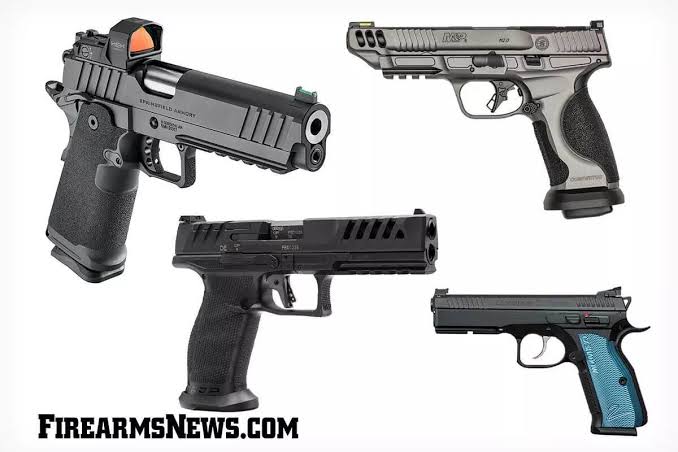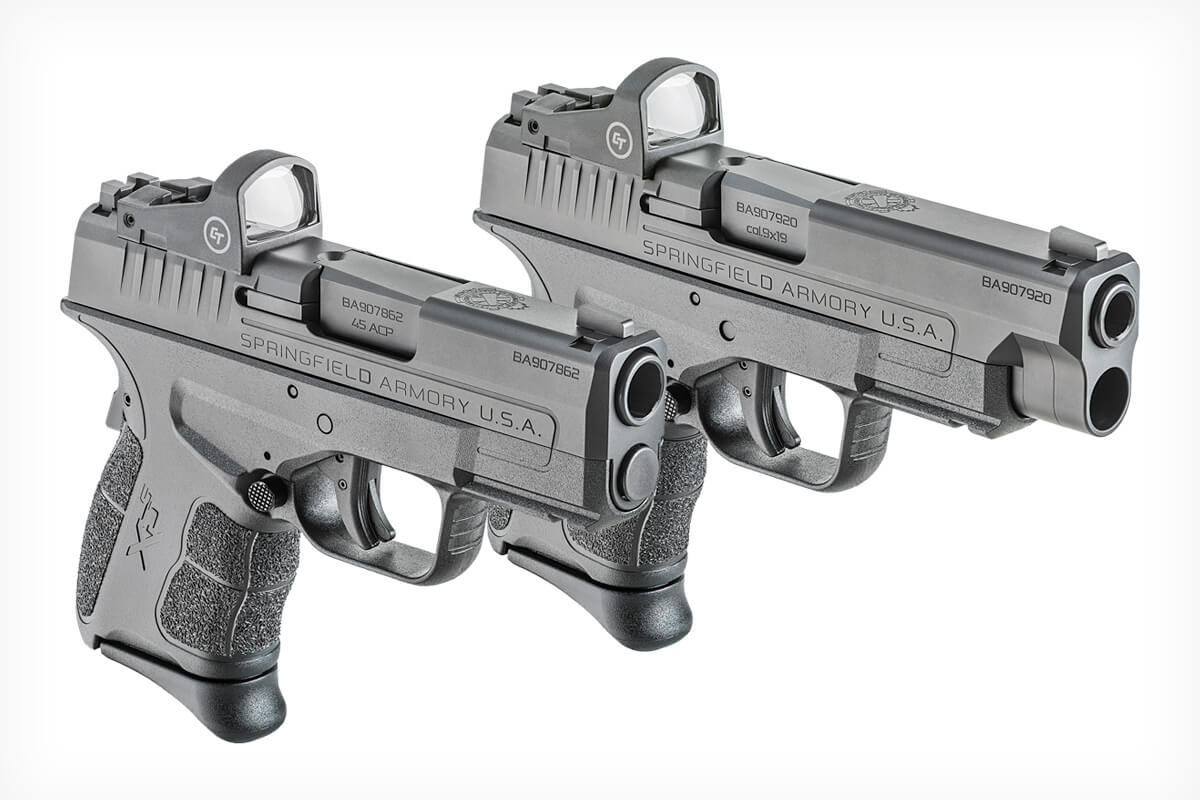

One of the first decisions every new handgun buyer faces is also one of the most consequential: full size or compact? It sounds simple, but the answer touches on everything from how you plan to carry the gun, to how well you'll shoot it, to what role it will play in your daily life. Get it right and you'll have a gun you reach for every day. Get it wrong and you'll have an expensive safe queen.
This guide breaks down the real differences between full size and compact pistols — not just the spec sheet numbers, but the practical implications for concealed carry, home defense, range training, and long-term ownership. By the end, you'll have a clear framework for making the right call for your situation.
Defining the Categories: What Do "Full Size" and "Compact" Actually Mean?
The firearms industry doesn't have a universal standard for these terms, but there are generally accepted size categories that most manufacturers follow:
| Category | Barrel Length | Overall Length | Typical Capacity (9mm) | Examples |
|---|---|---|---|---|
| Full Size | 4.5" – 5.0"+ | 7.5" – 8.5"+ | 15–21+ | Glock 17, SIG P320 M17, M&P 9 Full Size |
| Compact | 3.5" – 4.2" | 6.5" – 7.5" | 10–17 | Glock 19, SIG P320 M18, M&P 9 Compact |
| Subcompact | 3.0" – 3.5" | 5.5" – 6.5" | 6–13 | Glock 26, SIG P365, Springfield Hellcat |
| Micro Compact | 2.5" – 3.2" | 5.0" – 6.0" | 6–11 | Ruger LCP Max, Taurus GX4, S&W Bodyguard 2.0 |
For this comparison, we're focusing on the two most commonly debated categories: full size and compact. These are the guns most people are choosing between when they're buying their first or second handgun, and the decision has real consequences for how the gun performs in different roles.
Size and Weight: The Numbers That Drive Everything Else
The most obvious difference between full size and compact pistols is physical size, and that difference cascades into almost every other consideration. To make this concrete, here's a direct comparison using two of the most popular examples in each category:
| Specification | Glock 17 (Full Size) | Glock 19 (Compact) |
|---|---|---|
| Overall Length | 8.03" | 7.28" |
| Height | 5.47" | 5.04" |
| Barrel Length | 4.49" | 4.02" |
| Width | 1.26" | 1.26" |
| Unloaded Weight | 25.17 oz | 23.63 oz |
| Standard Capacity | 17+1 | 15+1 |
Notice that the width is identical — both guns are the same thickness. The meaningful size differences are in length and height. The G17 is about 0.75 inches longer and 0.43 inches taller than the G19. That might sound trivial, but those fractions of an inch have real implications for concealability, particularly grip height, which is the primary driver of printing when carrying IWB.
The weight difference is modest — about 1.5 ounces — and largely imperceptible in carry. Both guns feel substantial in the hand, which is actually an advantage for recoil management.
Concealability: Where Compact Wins Decisively
If concealed carry is your primary use case, the compact wins — and the reason is almost entirely about grip height rather than overall length. When you carry a pistol IWB (inside the waistband), the barrel and slide sit below your beltline and are naturally hidden. The grip is what prints against your clothing and gives away the gun's presence.
A full size pistol's taller grip extends higher above the beltline, making it more likely to print under a t-shirt or light jacket. A compact's shorter grip tucks more cleanly under cover garments, particularly for appendix carry or strong-side IWB carry in warmer climates where cover garments are minimal.
That said, full size pistols are carried concealed every day by experienced carriers who have optimized their holster setup, belt, and cover garment choices. It requires more deliberate effort — a quality holster with a claw or wing attachment, a sturdy gun belt, and appropriate clothing — but it's entirely achievable for most body types.
For new carriers or those who prioritize minimal effort in concealment, the compact is the more forgiving choice. For experienced carriers who are willing to dress around the gun, the full size is manageable.
Shootability: Where Full Size Has the Edge
Here's the tradeoff that surprises many new shooters: the larger gun is generally easier to shoot accurately. There are three reasons for this.
Longer sight radius. The distance between the front and rear sights is greater on a full size pistol, which makes it easier to align the sights precisely. Small errors in sight alignment are magnified at distance, and a longer sight radius reduces the impact of those errors. At 25 yards and beyond, the full size pistol's accuracy advantage becomes noticeable.
More mass absorbs recoil. A heavier gun moves less during firing, which means the muzzle rises less and returns to target faster. Full size pistols are easier to control during rapid fire and produce less felt recoil with the same ammunition. This is particularly relevant for new shooters who are still developing their grip and stance.
Fuller grip. A full size pistol's longer grip allows most shooters to get all four fingers on the grip, providing maximum control. Compact pistols sometimes leave the pinky floating with flush magazines, which reduces grip stability during recoil. Extended magazines solve this problem but add length.
For range training, competition, or any role where accuracy and speed matter more than concealability, the full size pistol is the more capable platform. This is why military and law enforcement have historically favored full size pistols for duty use.
Magazine Capacity: A Meaningful but Overstated Difference
Full size pistols typically carry 2-4 more rounds than their compact counterparts in the same caliber. In the Glock example above, that's 17+1 vs 15+1 — a difference of two rounds. For most defensive scenarios, this difference is unlikely to be decisive.
Where capacity matters more is in home defense or duty applications where you might face multiple threats or extended engagements. In those contexts, the full size pistol's higher capacity — and the ability to use higher-capacity magazines — is a genuine advantage.
It's also worth noting that compact pistols can often accept full size magazines. A Glock 19 will accept Glock 17 magazines, giving you 17+1 capacity when you want it. This makes the compact a more versatile platform — you can carry with a flush compact magazine for concealment and use full size magazines for home defense or range training.
Home Defense: Full Size or Compact?
For a dedicated home defense pistol that never leaves the house, the full size is generally the better choice. You don't need to conceal it, so the compact's primary advantage disappears. What you're left with is the full size's superior shootability, higher capacity, and longer barrel — all of which are advantages in a home defense context.
A full size pistol is also easier to mount a weapon light on and shoot accurately in low-light conditions, which is the most likely scenario for a home defense engagement. The longer barrel provides slightly higher muzzle velocity, which improves terminal ballistics with defensive ammunition.
That said, if you own only one gun and it needs to serve both carry and home defense roles, the compact is the more practical choice. It's a capable home defense pistol that also conceals well — the best all-around compromise for a single-gun owner.
Which Is Better for New Shooters?
This is a question that generates strong opinions, but the evidence points in a clear direction: new shooters generally learn faster and develop better fundamentals with a full size pistol. The reduced recoil, longer sight radius, and fuller grip make it easier to diagnose and correct errors in grip, stance, and trigger control.
Many experienced instructors recommend that new shooters start with a full size pistol for training, then transition to a compact for carry once their fundamentals are solid. The skills transfer directly — a shooter who has developed good technique on a full size will adapt quickly to a compact.
The counterargument is that if you're only going to own one gun, you should train with the gun you carry. In that case, a compact makes sense from day one, with the understanding that it may take slightly longer to develop consistent accuracy.
Practical Carry Considerations
Beyond the gun itself, the size category affects your entire carry setup:
| Factor | Full Size | Compact |
|---|---|---|
| Holster options | Extensive, especially OWB | Extensive, especially IWB |
| Belt requirement | Sturdy gun belt essential | Quality belt recommended |
| Cover garment | Heavier/longer required | T-shirt often sufficient |
| Carry position | Strong-side OWB or IWB | Appendix, strong-side, or OWB |
| All-day comfort | More demanding | More forgiving |
| Draw speed | Slightly easier (larger grip) | Comparable with practice |
| Climate adaptability | Better in cold/layered clothing | Better in warm/minimal clothing |
The Compact Advantage: One Gun, Multiple Roles
The compact pistol's enduring popularity comes from its versatility. It's small enough to carry concealed with reasonable effort, large enough to shoot well at the range, and capable enough for home defense. For most civilian shooters who own one or two guns, the compact hits the sweet spot that the full size and subcompact both miss.
This is why the Glock 19 has been the best-selling pistol in America for years running. It's not the best at any single thing — it doesn't conceal as easily as a micro-compact or shoot as well as a full size — but it's excellent at everything, which makes it the right choice for most people most of the time.
The Full Size Advantage: When Performance Matters Most
The full size pistol earns its place when performance is the priority over portability. Competition shooters, law enforcement officers, home defense-focused buyers, and serious range enthusiasts all have good reasons to choose a full size. The accuracy advantage, capacity advantage, and shootability advantage are real and meaningful in contexts where you're pushing the gun's limits.
If you carry a full size and are willing to invest in a quality holster setup and appropriate clothing, you can make it work for concealed carry too. Many experienced carriers prefer full size pistols precisely because they shoot them better — and a gun you shoot better is a more effective defensive tool, even if it's slightly harder to conceal.
Complete Your Setup with the Right Holster
Whether you choose a full size or compact, a quality holster is the foundation of a functional carry setup. At WARRIORLAND, we offer holsters purpose-built for both categories across the most popular platforms:
- Universal IWB Leather Holster — Full Size & Compact Pistols — A versatile leather IWB holster designed to fit both full size and compact pistols. A practical option if you own multiple guns or want one holster that works across platforms.
- Universal OWB Holster — Fits Most Gun Types, Adjustable Retention — An outside-the-waistband holster with adjustable retention and index finger release. Compatible with most full size and compact pistols. Ideal for range use, open carry, or IPSC/airsoft applications.
- Universal OWB Paddle Holster with Optic Cut — Fits 40+ Compact Pistols — A purpose-built OWB paddle holster compatible with over 40 compact pistol models including Glock 19/26/43X, M&P Shield Plus, Hellcat/Pro, FN Reflex, Taurus G3C, and more. Optics-cut ready.
- SIG P320 M17 / M18 IWB & OWB Convertible Holster — Full Size & Compact — A dual-mode convertible holster covering both the full size P320 M17 and compact M18. Perfect if you own both or want the flexibility to switch between IWB and OWB carry.
- SIG P320 IWB Kydex Holster with Claw — M17 Full Size / M18 Compact — A claw-equipped IWB holster for the P320 family with optics cut. The claw attachment minimizes grip printing for both the full size M17 and compact M18.
- S&W M&P 9/.40 IWB Kydex Holster — Full Size & Compact, M2.0 Compatible — Fits both the M&P 9/.40 Compact and Full Size, including M2.0 variants. Adjustable cant and Posi-Click retention for a secure, customized carry setup.
- SIG P320 Full Size / Compact OWB Kydex Paddle Holster — Optics Cut — An OWB paddle holster covering the P320 Full Size, Compact, and X Carry variants. Full optics cut and trigger guard coverage for open carry or range use.
Final Verdict: Which Should You Choose?
| Your Priority | Recommended Choice |
|---|---|
| Concealed carry is primary use | Compact |
| Home defense only | Full Size |
| One gun for everything | Compact |
| Competition / range performance | Full Size |
| New shooter learning fundamentals | Full Size (then transition) |
| Warm climate / minimal clothing | Compact |
| Cold climate / layered clothing | Either (full size more manageable) |
| Duty / law enforcement | Full Size |
| Maximum versatility | Compact |
The compact pistol is the right choice for most civilian shooters — it's the best all-around platform for someone who needs one gun to serve multiple roles. But the full size is the better performer when concealment isn't a constraint, and it's the smarter choice for dedicated home defense, competition, or duty use.
The good news is that you don't have to choose forever. Many experienced shooters own both — a compact for daily carry and a full size for home defense and range training. The skills transfer directly between platforms, and having both gives you the right tool for every situation.
Whatever you choose, pair it with a quality holster from WARRIORLAND and invest in regular training. The best gun is the one you shoot well and carry consistently — and the right holster makes both of those things easier.