
The Question That Divides the CCW Community
Few topics generate more debate in concealed carry circles than weapon-mounted lights. On one side: experienced instructors and serious practitioners who argue that a weapon light is non-negotiable for any defensive pistol. On the other: practical-minded carriers who point out that most people carry without lights their entire lives without incident, and that adding a light creates real trade-offs in concealability, holster options, and complexity.
Both sides make legitimate points. The honest answer isn't a simple yes or no — it's a framework for thinking about your specific situation, your carry context, and what you're actually optimizing for. This guide gives you that framework, drawing on the real-world perspectives of experienced carriers who've thought through this question carefully.
The Case For: Why Serious Practitioners Insist on Weapon Lights
The Target Identification Argument — And Why It's Compelling
The strongest argument for a weapon-mounted light is also the most fundamental rule of defensive shooting: you must positively identify your target before firing. This isn't a tactical nicety — it's a legal and moral requirement. Shooting an unidentified target is potentially criminal regardless of your intent.
The problem is that most defensive encounters happen in low-light or no-light conditions. Home invasions typically occur at night. Parking garage confrontations happen in dim artificial light. Bar fights spill into dark alleys. The statistics consistently show that a significant percentage of violent crimes occur in conditions where ambient light is insufficient for positive target identification.
A weapon-mounted light solves this problem directly. When you draw and illuminate, you can see exactly what you're pointing your pistol at. Without a light, you're making a potentially lethal decision based on incomplete information.
The Handheld Light Counterargument — And Its Limitations
The most common response to the weapon light argument is: "I carry a handheld flashlight." This is a legitimate partial solution, but it has real limitations that weapon light advocates correctly identify:
- Two-handed shooting is compromised: Holding a flashlight in the support hand means you can't use a proper two-handed grip. FBI technique (light held away from the body) and Harries technique (light pressed against the back of the gun hand) both compromise grip stability compared to a weapon-mounted light that allows a full two-handed grip.
- Stress degrades fine motor skills: Under the adrenaline dump of a real defensive encounter, managing two separate objects — pistol and flashlight — is significantly more difficult than managing one. The weapon-mounted light eliminates this coordination requirement.
- The light goes where the gun goes: A weapon-mounted light automatically illuminates whatever you're pointing the pistol at. A handheld light requires conscious coordination to keep the light on target while managing the pistol.
- Re-holstering is complicated: After a defensive encounter, re-holstering with a handheld light in the support hand is awkward and potentially unsafe. A weapon-mounted light re-holsters with the pistol.
None of this means handheld lights are useless — they're valuable tools that serve functions a weapon light doesn't (searching without pointing a gun at things, for example). But they're not a complete substitute for a weapon-mounted light in a defensive context.
The Home Defense Imperative
Even carriers who are skeptical of weapon lights for concealed carry often acknowledge that a weapon light is essentially mandatory for home defense. The home defense context makes the argument clearest:
- You're moving through a dark structure toward an unknown threat
- Family members may be in the house — positive identification before firing is critical
- You need both hands for the pistol while navigating obstacles in the dark
- The threat may be in a dark room where ambient light is insufficient
A home defense pistol without a weapon light is a pistol that can't safely be used in the dark. Given that home invasions predominantly occur at night, this is a significant limitation.
The Case Against: Real Trade-Offs That Matter
The Concealability Problem
Adding a weapon light to a pistol increases its dimensions in ways that directly affect concealability. A rail-mounted light like the Streamlight TLR-7A adds approximately 1.5 inches to the pistol's length and 0.8 inches to its height. This isn't trivial:
- The light extends below the trigger guard, making the pistol print more against clothing
- The increased overall size requires a larger holster that takes up more waistband real estate
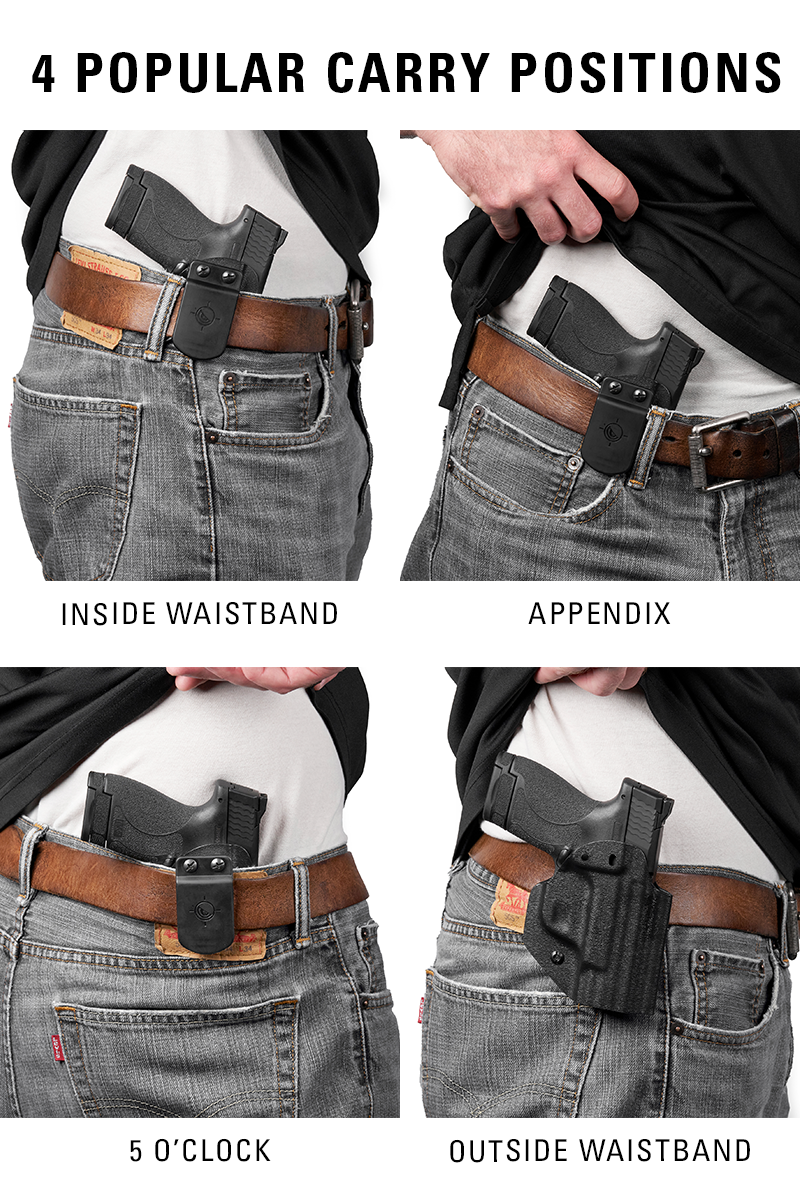
- Appendix carry becomes more challenging with a light-equipped pistol due to the increased bulk
- Cover garment requirements become more demanding — lighter clothing that works for a bare pistol may not conceal a light-equipped one
For carriers who prioritize deep concealment — those who carry in warm climates, wear light clothing, or carry in environments where printing is a serious concern — the concealability trade-off is real and significant.
The Holster Complexity Problem
A light-equipped pistol requires a light-bearing holster — a holster specifically designed to accommodate the light's dimensions. This creates several practical complications:
- Holster specificity: A holster designed for a Glock 19 with a TLR-7A won't fit a Glock 19 with a TLR-1 or a SureFire X300. The light model matters, not just the pistol model.
- Reduced options: The holster market for light-bearing configurations, while growing, is smaller than for bare pistols. Finding a quality IWB light-bearing holster in your specific pistol/light combination requires more research.
- Cost: Light-bearing holsters typically cost more than standard holsters due to the additional engineering required.
- Switching costs: If you change lights, you may need a new holster. If you change pistols, you definitely need a new holster.
The "Pointing a Gun at Things" Problem
This is the most philosophically interesting objection to weapon-mounted lights, and it's one that experienced carriers take seriously. A weapon-mounted light can only illuminate things you're pointing your gun at. In a non-defensive context — investigating a noise in the house, checking on a family member, navigating a dark parking lot — using your weapon light means pointing your gun at whatever you're illuminating.
The four rules of firearm safety include "never point a gun at anything you're not willing to destroy." Using a weapon light to illuminate a noise in the kitchen means pointing your gun at the kitchen. If it's your spouse getting a midnight snack, you've just violated a fundamental safety rule.
The solution — which most serious practitioners advocate — is to carry both a weapon-mounted light and a handheld flashlight. The handheld light handles non-threatening illumination; the weapon light handles confirmed threat identification. This is the correct answer, but it adds another item to the carry kit.
The Reliability and Maintenance Consideration
Adding a weapon light adds a component that can fail. Batteries die. Switches malfunction. Lights get knocked loose. For carriers who prioritize simplicity and reliability above all else, every additional component is a potential failure point.
This concern is real but manageable. Quality weapon lights from reputable manufacturers are extremely reliable. Regular battery checks and periodic function testing address most reliability concerns. But the concern isn't irrational — it's a legitimate factor in the trade-off analysis.
The Honest Middle Ground: Context-Dependent Thinking
Your Carry Context Determines the Answer
The weapon light debate is often framed as a universal question with a universal answer. It isn't. The right answer depends on your specific carry context:
Factors that favor carrying a weapon light:
- You spend significant time in low-light environments (night shift work, late-night activities, rural areas with limited street lighting)
- Home defense is a primary use case for your carry pistol
- You carry a full-size or compact pistol where the light's size impact is proportionally smaller
- Your clothing and carry position accommodate a light-equipped pistol without significant printing
- You're willing to invest in a quality light-bearing holster
- You train regularly and can practice the light-integrated draw stroke
Factors that favor carrying without a weapon light:
- You carry a micro-compact pistol where adding a light significantly compromises concealability
- You carry in warm climates or light clothing where printing is a constant concern
- Your carry environments are predominantly well-lit (urban daytime carry, office environments)
- You consistently carry a quality handheld flashlight as part of your EDC
- Deep concealment is your primary priority and you're willing to accept the trade-off
The Tiered Approach: Different Guns for Different Contexts
Many experienced carriers resolve the weapon light debate by using different pistols for different contexts:
- Primary carry (concealment priority): Micro-compact or compact pistol without a light, carried IWB for maximum concealment. A quality handheld flashlight supplements the carry kit.
- Home defense: Full-size or compact pistol with a weapon light, staged in a holster or quick-access safe. Concealment is irrelevant; maximum capability is the priority.
- Duty or open carry: Full-size pistol with weapon light in a light-bearing OWB holster. Concealment isn't required; full capability is.
This approach acknowledges that the optimal carry setup varies by context and that no single configuration is optimal for all situations.
Lumen Requirements: How Much Light Is Enough?
Understanding Output Levels
Not all weapon lights are equal, and lumen output matters more than many buyers realize:
Under 200 lumens: Adequate for close-range target identification in complete darkness, but insufficient for disorienting a threat or illuminating at distance. Suitable for compact carry lights where size is the primary constraint.
200–500 lumens: The practical minimum for serious defensive use. Provides adequate target identification at typical defensive distances and some disorientation effect on threats.
500–800 lumens: The current standard for quality defensive weapon lights. Provides positive target identification at extended distances, meaningful disorientation effect, and adequate performance in partially lit environments where lower-output lights struggle.
800+ lumens: The high end of practical defensive use. Provides maximum disorientation effect and illumination at distance. Diminishing returns above this level for most defensive applications.
The candela consideration: Lumens measure total light output; candela measures focused beam intensity. A light with high candela throws a bright, focused beam that reaches further. For outdoor use and longer-distance identification, candela matters as much as lumens. For indoor home defense, lumens are the more relevant metric.
Trigger-Mounted vs Rail-Mounted: The Compact Carry Solution
The Rail Requirement Problem
Traditional weapon lights require a Picatinny or accessory rail on the pistol's frame. Many compact and micro-compact carry pistols — the Glock 43, SIG P365 base model, Springfield Hellcat standard — don't have rails. This has historically been a barrier to adding weapon lights to the most concealable carry pistols.
Trigger-mounted lights solve this problem by attaching to the trigger guard rather than a rail, enabling light integration on pistols that lack rails. The trade-off is lower output (typically 100–200 lumens) and a more complex draw stroke that must account for the light's position.
WARRIORLAND's Light Solutions: Matching Output to Application
For Compact Carry Pistols Without Rails (Trigger-Mounted, 150 Lumens):
- SLL-100 Pistol Light Laser Combo — Glock 43X MOS — 150-lumen tactical flashlight with green/red laser sight. Trigger-mounted design requires no rail. Three modes: constant, strobe, laser only. Adds light and laser capability to the G43X MOS without compromising the pistol's slim profile. The complete solution for slim-carry platforms that lack rails.
- SLL-110 Pistol Light Laser — Springfield Hellcat Pro — 150-lumen trigger-mounted light with red laser. Power indicator, three modes (strobe/constant/laser only). Precision-fit for the Hellcat Pro's trigger guard geometry.
- SLL-110 Light Laser + Holster Combo — Hellcat Pro — Complete package: SLL-110 light/laser plus a precision-fit IWB holster. The most efficient way to add light capability to a Hellcat Pro carry setup without the research burden of matching components separately.
For Full-Size and Compact Pistols with Rails (Rail-Mounted, 800 Lumens):
- Crossbow MA1 800-Lumen Rail-Mounted Weapon Light — 800 lumens of LED output with integrated green laser. Magnetic USB rechargeable with OLED battery status display. Universal rail mount fits most pistols with Picatinny or accessory rails. The flagship WARRIORLAND light for serious defensive use — the output level that serious practitioners recommend as the minimum for duty and home defense applications.
- MA2 Pistol Light + Holster — Springfield Hellcat Pro — 800-lumen MA2 paired with a precision-fit IWB holster. The complete home defense and carry solution for Hellcat Pro owners who want maximum light output with a matched holster.
- MA2 Pistol Light + Holster — M&P 9mm M2.0 — 800-lumen MA2 with dedicated IWB holster for M&P M2.0 in 3.6", 4.0", and 4.25" barrel configurations.
- MA2 Pistol Light + Holster — M&P Shield 9mm EZ — 800-lumen MA2 with precision-fit IWB holster for the M&P Shield EZ platform.
- MA1 Light-Bearing IWB Holster Combo — M&P 9 M2.0 — MA1 800-lumen light with green laser, paired with a dedicated IWB holster for M&P M2.0 carriers who want the complete light-integrated carry system.
For Light-Bearing OWB Carry (Duty and Range):
- OWB Light-Bearing Holster — Glock 17/19/19X/45 Gen3-5 — Fits TLR-7A, TLR-7X, TLR-7 HL-X, TLR-8A, TLR-8X. Optic cut, thumb release, 2.0" mid-ride belt loop. For Glock carriers running Streamlight TLR-7 series lights in OWB configurations.
- OWB Light-Bearing Holster — Glock 17/19 with TLR-1/1S/HL — For Glocks equipped with Streamlight TLR-1 series lights. OWB Kydex for range and duty use.
Training: The Non-Negotiable Requirement
Why a Weapon Light Without Training Is Worse Than No Light
Adding a weapon light to your carry pistol without training to use it creates a false sense of security and introduces new failure modes. The light-integrated draw stroke is different from the standard draw stroke. The activation technique must be practiced until it's automatic. The decision-making framework for when to activate the light must be internalized before you need it.
What weapon light training covers:
- Activation during the draw: When in the draw stroke do you activate the light? Before the pistol is on target (illuminates the path to the target) or after (activates only when needed)? Both approaches have advocates; both require practice.
- Momentary vs. constant activation: Momentary activation (light on only while the switch is pressed) preserves your night vision and doesn't reveal your position. Constant activation is easier to manage under stress. Training helps you develop the right habits for your context.
- Re-holstering with the light: A light-bearing holster requires the light to be in the correct position for re-holstering. Practice this until it's automatic.
- Low-light shooting fundamentals: Shooting in low light is different from shooting in daylight. The light creates shadows, affects depth perception, and changes how you process visual information. Range time in low-light conditions is essential.
Dry Fire Integration
Weapon light training doesn't require a range. Dry fire practice with your light-equipped pistol — practicing the draw stroke, light activation, and re-holstering — builds the muscle memory that makes the system work under stress. Fifteen minutes of daily dry fire with your complete setup is more valuable than monthly range visits without it.
The Practical Decision Framework
Questions to Ask Before Deciding
Rather than a universal recommendation, here's a framework for making the right decision for your situation:
1. What is your primary defensive context?
If home defense is your primary concern, a weapon light is essentially mandatory. If you're primarily concerned with street-level defensive scenarios in well-lit urban environments, the calculus is different.
2. What pistol are you carrying?
A full-size or compact pistol with a rail can accommodate a weapon light with manageable concealability impact. A micro-compact without a rail requires a trigger-mounted solution with lower output. The pistol determines your light options.
3. How do you dress?
If you regularly wear light clothing in warm weather, a light-equipped pistol may print unacceptably. If you typically wear a cover garment, the additional bulk is more manageable.
4. Are you willing to train with it?
A weapon light you haven't trained with is potentially worse than no light. If you're not willing to invest in training, the light may create more problems than it solves.
5. Do you consistently carry a handheld flashlight?
If yes, you have a partial solution to the low-light identification problem. If no, the argument for a weapon light strengthens considerably.
6. What's your holster situation?
Are you willing to invest in a quality light-bearing holster? Are you willing to accept the reduced holster options that come with a light-equipped pistol?
The Bottom Line: An Honest Recommendation
Here's the honest answer that accounts for the real trade-offs:
For home defense: A weapon light is not optional. It's a safety requirement. A pistol staged for home defense without a weapon light cannot be safely used in the dark conditions where home invasions predominantly occur. Add a light. Train with it. This is non-negotiable.
For concealed carry: A weapon light is strongly recommended but context-dependent. If your pistol has a rail, your clothing accommodates the additional bulk, and you're willing to train with it, add a light. If you're carrying a micro-compact for deep concealment and a light would compromise your ability to carry consistently, a quality handheld flashlight is an acceptable compromise — but understand what you're trading away.
The minimum viable solution: If you're not ready to commit to a weapon-mounted light, at minimum carry a quality handheld flashlight every day. A light in your pocket is better than no light at all, even if it's not the optimal solution.
The ideal solution: A weapon-mounted light on your carry pistol, a handheld flashlight in your pocket, and training with both. This covers every scenario — the weapon light for confirmed threat identification, the handheld for everything else.
WARRIORLAND's light lineup covers every carry configuration — from the SLL-100 trigger-mounted light/laser for slim carry pistols to the MA1 800-lumen rail-mounted light for full-capability defensive setups. Match the light to your pistol, your carry context, and your training commitment. Then train with it until it's automatic.
The light doesn't make you safer. The light plus the training plus the consistent carry makes you safer. Build the complete system.